
Last updated: July 18, 2026
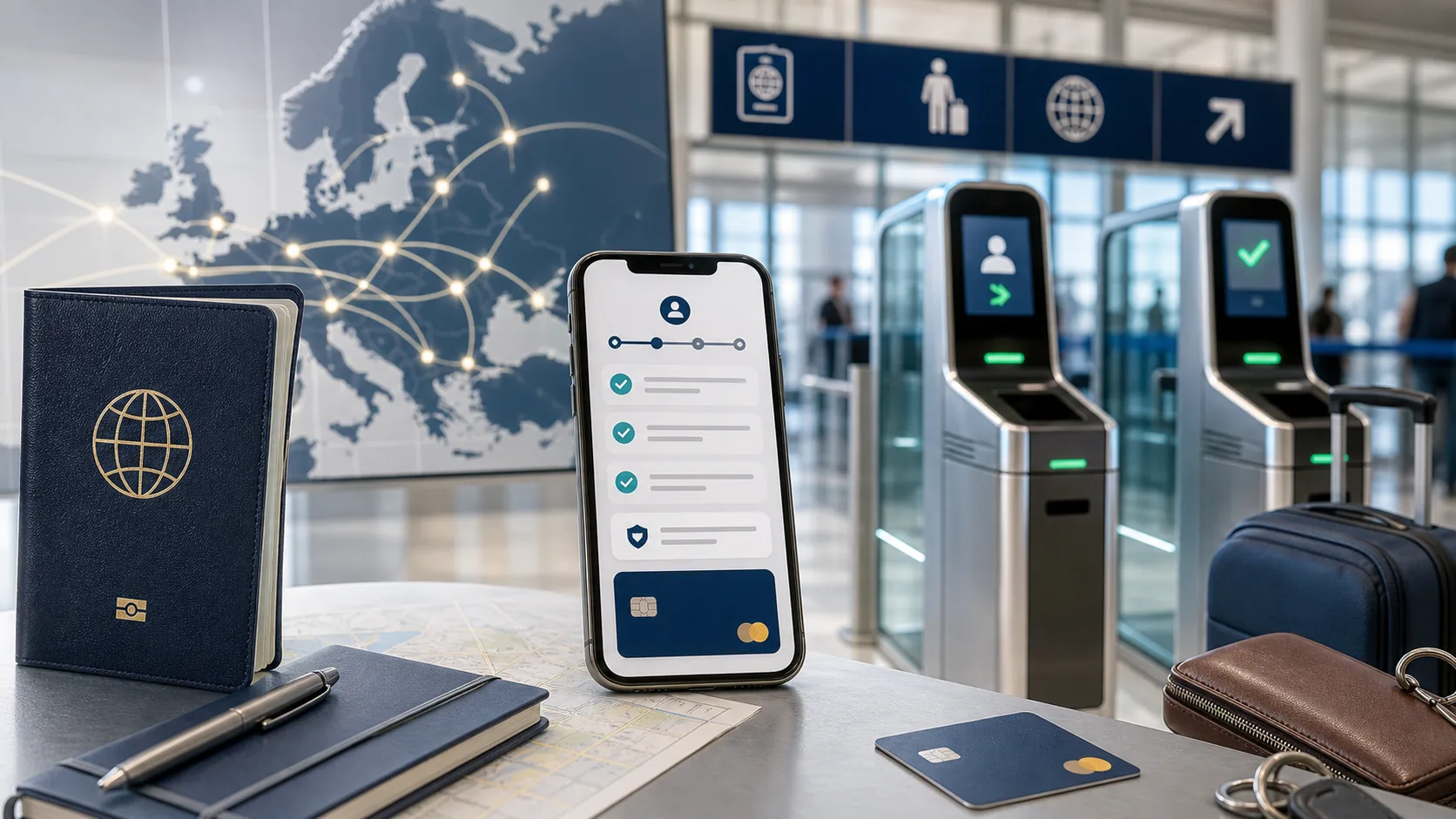
ETIAS for UK travellers is a new pre-travel authorisation you will need for short trips to most of Europe once the system launches, expected in the last quarter of 2026. It is not a visa, it costs €20 (free for under-18s and over-70s), and it lasts up to three years. You do not need to apply yet — the system is not live — but it is worth understanding before you book.
ETIAS quick facts
- What it is: the European Travel Information and Authorisation System — an online travel authorisation, not a visa.
- Who needs it: UK passport holders (and other visa-exempt travellers) for short stays in the Schengen area and Cyprus.
- When: expected to start in the last quarter of 2026; the exact date is not yet confirmed.
- Cost: €20 (about £17), free for travellers under 18 or over 70.
- Validity: up to 3 years, or until your passport expires — whichever comes first.
- Where to apply: only the official EU ETIAS website or app, once it opens. It is not open yet.
- Not the same as EES: ETIAS is a pre-travel authorisation; the EU Entry/Exit System (EES) is the biometric check at the border.
What is ETIAS?
ETIAS is the European Travel Information and Authorisation System — an online travel authorisation for visa-exempt visitors to Europe, sometimes loosely called an ETIAS visa waiver. It is not a visa.
Once live, UK passport holders will complete a short online application, linked to their passport, before travelling to participating European countries for short stays. It is designed as a light-touch security pre-check, similar in spirit to the US ESTA. Because the UK is outside the EU, British travellers fall into the group that will need this Europe travel authorisation for the first time.
Do UK travellers need ETIAS in 2026?
Not yet — but you will once ETIAS launches, expected in late 2026, if you do not already hold a visa or residence permit.
UK passport holders travelling to the Schengen area and Cyprus for short stays (up to 90 days in any 180) will need an approved ETIAS before they travel, once the system is running. Until it officially opens, there is nothing to apply for and nothing to pay. If your trip is booked before ETIAS goes live, you will not need it for that journey — but keep an eye on the launch timing for trips later in the year.
When does ETIAS start?
ETIAS is expected to start in the last quarter of 2026, but the exact date has not been confirmed.
The launch is tied to the rollout of the new EU border checks under the Entry/Exit System, which came first. ETIAS is expected to follow roughly six months later, with the official start date announced several months in advance. There is also likely to be a transition period after launch, during which travellers are given time to comply. In short: expect it around Q4 2026, but treat any single date as provisional until the EU confirms it.
How much does ETIAS cost?
ETIAS costs €20 (about £17). It is free for applicants under 18 or over 70.
The fee was confirmed at €20 — higher than the €7 figure quoted in earlier reports, so ignore older €7 references. One approved ETIAS covers multiple trips during its validity, so it is a one-off cost rather than a per-trip charge. You pay only when you apply through the official system; there is nothing to pay now.
Fee exemption: travellers under 18 or over 70 still need an ETIAS but do not pay the €20 fee.
How long does ETIAS last?
An approved ETIAS is valid for up to three years, or until your passport expires — whichever comes first.
Because it is linked to your passport, renewing your passport means applying for a new ETIAS. Within its validity, you can use the same authorisation for multiple short trips to participating countries, so most travellers will only apply every few years.
How to apply for ETIAS from the UK
You will apply online through the official EU ETIAS website or app once it opens — it is not open yet.
When the system is live, the application is expected to take a few minutes: enter your passport details, answer some background questions, pay the €20 fee, and most approvals should come through quickly. You cannot apply today, and you should never use a third-party site claiming to take ETIAS applications now.
Beware of scam websites. Any site currently charging for ETIAS is fraudulent. Only apply through the official EU ETIAS website or app, and only once it has launched.
Which countries will require ETIAS?
ETIAS will apply to the Schengen area and Cyprus — around 30 European countries. It will not apply to Ireland.
That covers popular UK destinations such as Spain, France, Italy, Portugal, Greece, the Netherlands and Germany. Ireland is not in the Schengen area, and UK travellers use the Common Travel Area, so you will not need ETIAS for trips to Ireland. Always check the official list of ETIAS countries for your specific destination before you travel.
ETIAS vs EES: what’s the difference?
EES registers your entry and exit at the border with biometrics; ETIAS is an online authorisation you get before you travel.
| ETIAS | EES | |
|---|---|---|
| What it is | Pre-travel authorisation | Border entry/exit registration |
| When it happens | Before you travel (online) | At the border (in person) |
| Cost | €20 (exemptions apply) | Free |
| What’s involved | Short online form + passport | Fingerprints + facial scan |
| Validity | Up to 3 years / passport | Record kept per crossing |
They work together: you get your ETIAS before the trip, then your details are recorded by EES at the border. For the border-queue side of the story, see our full EES guide for UK travellers.
Quick definitions
- ETIAS
- European Travel Information and Authorisation System — an online pre-travel authorisation for visa-exempt visitors to Europe.
- Travel authorisation
- Permission to travel granted before departure — lighter than a visa, tied to your passport.
- Schengen Area
- A group of European countries with shared external border rules; the main area where ETIAS will apply, along with Cyprus.
- EES (Entry/Exit System)
- The EU’s biometric system that records non-EU travellers entering and leaving at the border.
- UK ETA
- The UK’s own travel authorisation for visiting or transiting the UK — a completely separate system from ETIAS. If your trip also includes Britain, see our UK ETA 2026 guide.
Do I need ETIAS? A quick check
You will most likely need ETIAS (once it launches) if all of these apply:
- You hold a UK (or other visa-exempt) passport.
- You are travelling to a Schengen-area country or Cyprus for a short stay.
- You do not already hold a visa or residence permit for that country.
You will not need ETIAS for Ireland, and you do not need it for any trip taken before the system officially launches.
What UK travellers should do before booking Europe trips
- Check your passport validity well ahead — ETIAS is linked to your passport, and Europe has its own passport-validity rules.
- Note the expected launch (Q4 2026) so you know whether a given trip will need ETIAS.
- Bookmark the official EU ETIAS site and apply only there, once it opens.
- Plan for the border checks too — read our EES for UK travellers guide and build in extra time at busy periods.
- Sort your airport logistics early with our airport arrival time calculator.
Common ETIAS mistakes to avoid
- Applying too early on a scam site — the official system is not open yet; anyone charging now is fraudulent.
- Confusing ETIAS with a visa — it is a lighter travel authorisation, not a visa.
- Assuming it covers Ireland — it does not.
- Relying on the old €7 figure — the confirmed fee is €20.
- Forgetting the passport link — renew your passport and you will need a fresh ETIAS.
FAQs about ETIAS for UK travellers
Do UK citizens need ETIAS?
Yes, once ETIAS launches (expected in the last quarter of 2026), UK passport holders will need it for short stays in the Schengen area and Cyprus, unless they already hold a visa or residence permit.
When will ETIAS start?
ETIAS is expected to start in the last quarter of 2026. The exact date is not yet confirmed, and there is likely to be a transition period after launch.
How much does ETIAS cost?
€20 (about £17). It is free for travellers under 18 or over 70. One approved ETIAS covers multiple trips during its validity.
Is ETIAS a visa?
No. ETIAS is a travel authorisation for visa-exempt travellers, not a visa. It is a lighter, online pre-travel check.
Do children need ETIAS?
Yes, all travellers need an ETIAS, but applicants under 18 are exempt from the €20 fee.
How long is ETIAS valid?
Up to three years, or until your passport expires, whichever comes first. It is linked to the passport you apply with.
Do I need ETIAS for Ireland?
No. Ireland is not in the Schengen area, and UK travellers use the Common Travel Area, so ETIAS is not required for trips to Ireland.
What is the difference between ETIAS and EES?
EES registers your entry and exit at the border using biometrics; ETIAS is an online authorisation you obtain before you travel. You get ETIAS first, then EES records you at the border.
Can I apply for ETIAS now?
No. The system is not live yet, so there is nothing to apply for. Any website taking ETIAS applications today is a scam.
Where should I apply for ETIAS?
Only through the official EU ETIAS website or app, and only once it has launched. Avoid third-party sites that charge extra fees.
The bottom line
ETIAS for UK travellers is coming, most likely in the last quarter of 2026: a €20 online travel authorisation, valid up to three years, for short trips to the Schengen area and Cyprus. There is nothing to do yet — the system is not open — but understanding it now means no surprises when you book. When it launches, apply only through the official EU site, and remember it works alongside the EES border checks rather than replacing them.
Disclaimer: Travel rules can change. Always check official EU and GOV.UK guidance before travelling.
Planning a Europe trip? TripBuffer helps you prepare for smoother journeys, airport transfers, and travel updates before you go.
Sources
Based on the official EU Travel Europe (ETIAS) and GOV.UK EU Entry/Exit System guidance. Last checked 9 July 2026 — ETIAS timing and details can change, so confirm on the official EU and GOV.UK pages before you travel.

Reviewed by Muhammad Umar Khan
Founder and editor of TripBuffer. Reviewed against official airport, airline and transport-provider information. For our research standards, see the Editorial Policy.