
Last updated: September 3, 2026
Use the calculator below to estimate how early to get to the airport for domestic or international flights based on baggage, airport size and the extra friction that often slows down check-in and security.
Estimate Your Airport Arrival Time
Estimate how early you should get to the airport based on flight type, airport size, baggage and the extra friction that often slows down check-in and security.
Quick Examples
Example 1: Domestic flight, carry-on only, small airport, standard travel day.
This setup usually points to a Standard arrival target because the airport process is relatively simple.
Example 2: International flight, checked baggage, large hub, busy day.
This setup usually points to a Cautious or Extra Buffer arrival target because baggage, queues and airport scale all add friction.
Example 3: Long-haul international flight, checked bags, off-airport parking, travelling with children.
This setup usually points to Extra Buffer because several slow points can stack up before you even reach security.
How This Calculator Works
This tool starts with a practical base arrival target for your flight type, then adds time for the factors that most often slow travelers down before departure.
What You Need To Enter
- flight type
- airport size
- carry-on only or checked baggage
- whether you are traveling on a busy day or peak period
- whether extra document or passport checks are likely
- whether parking, shuttle time or rental car return adds friction
- whether children or extra assistance will slow the process down
What Your Result Means
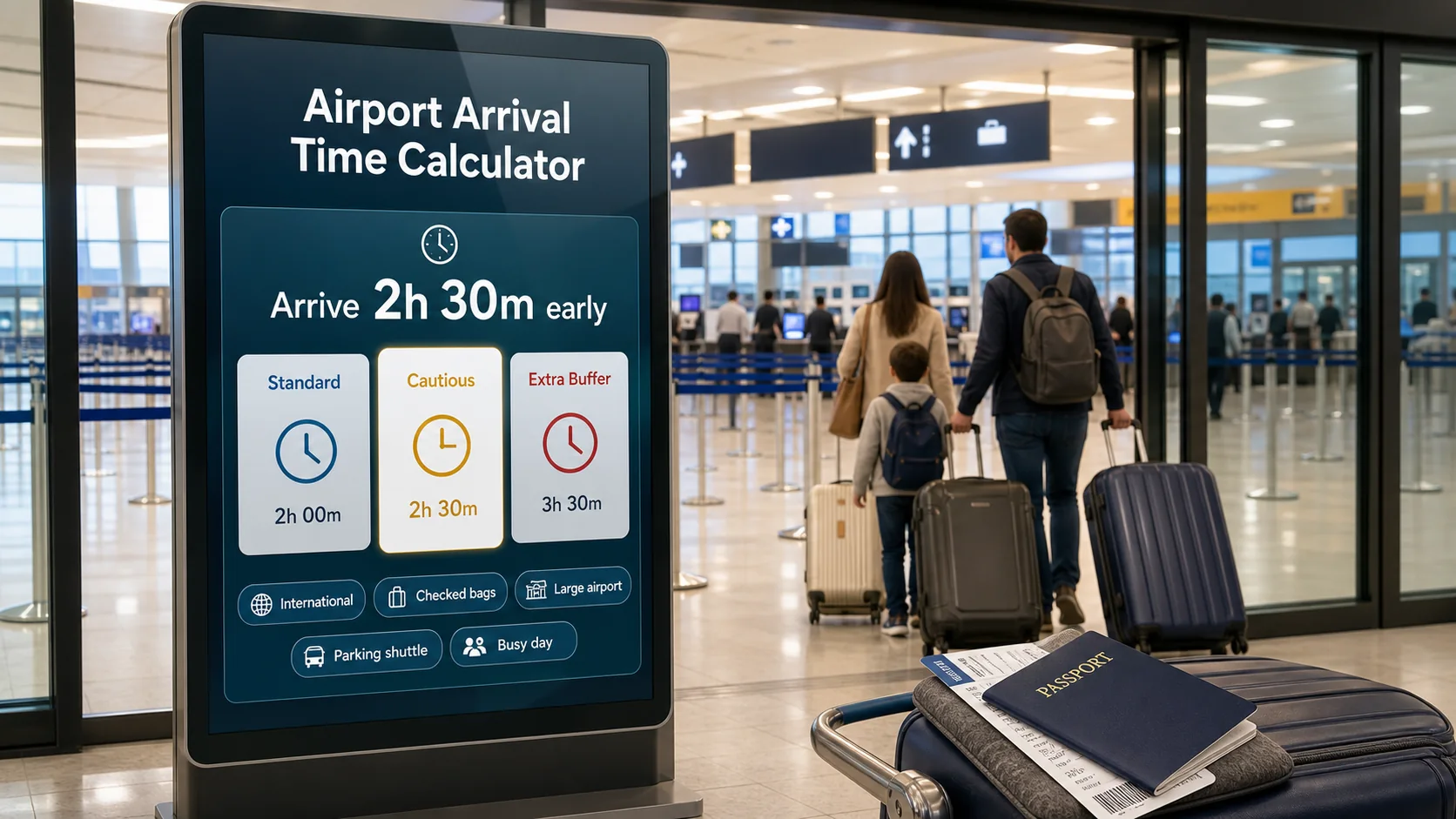
- Standard: a normal airport-arrival target for your trip setup
- Cautious: a fuller buffer because the process is more complex than average
- Extra Buffer: a deliberately earlier target because several friction points could stack up
Typical Airport Arrival Scenarios
| Scenario | Suggested Arrival | Main Reason |
|---|---|---|
| Domestic, carry-on only, small airport | 90 minutes | Simple process with fewer queues and less walking |
| Domestic, checked bags, busy airport | 120 minutes | Bag drop and heavier queues can slow the start of the trip |
| International, carry-on only, medium airport | 150 minutes | Security and document checks often need more buffer |
| International, checked bags, large hub | 180 minutes | Bag drop, longer walking distances and bigger queues |
| Long-haul international with parking or family travel | 210+ minutes | Several small delays can stack into a much slower airport process |
When This Calculator Can Be Wrong
This calculator is a planning tool, not a guarantee. Results can change if your airline has an earlier bag-drop cutoff, if security lines are unusually long, if weather or disruption affects check-in, or if your airport process is slower than normal for that day.
Methodology
This calculator starts with a base airport-arrival target for your departure type, then adds time for factors that usually create friction:
- large airport layout
- checked baggage
- busy travel periods
- extra document checks
- parking, shuttle or rental return time
- family travel or extra assistance needs
Related Tools and Guides
- Layover Calculator
- Best Time to Leave for Airport Calculator
- All TripBuffer Tools
- TripBuffer Guides
- TripBuffer Compare Pages
- Heathrow to Central London Taxi vs Train vs Coach
- How Long Layover Do I Need at Heathrow?
- Heathrow Terminal Transfer Times
If the harder part of your trip is the long-haul body-clock shift rather than the airport timing, use the Jet Lag Planner before you travel and compare it with your departure-day timing plan.
If you are also planning for the post-flight time-zone hit, pair this page with Best Jet Lag Planner for Long-Haul Flights.
Frequently Asked Questions
How early should I get to the airport for a domestic flight?
Many domestic trips can work with around 90 minutes, but checked baggage, a busy airport or extra parking and shuttle time can push the better target higher.
How early should I get to the airport for an international flight?
International trips usually need more buffer than domestic departures because document checks, longer queues and earlier airline cutoffs can all add friction.
Does checked baggage change the answer?
Yes. Checked baggage often adds enough bag-drop time and queue exposure to justify arriving earlier than a carry-on-only traveler.
Should I add more time at large airports?
Yes. Large hubs often mean longer walking distances, more complex layouts and heavier queues, so a bigger buffer is usually the safer choice.
Need a more exact airport-arrival answer?
Use the calculator first, then open the support guides that match your trip shape: how early to get to the airport for domestic flights and how early to get to the airport for international flights.
Traveling during FIFA World Cup 2026?
Use the airport arrival tool with the new World Cup travel guides if you are flying into the US for matches and want a more realistic airport buffer than the usual generic advice.
Popular airport transfer guides

Reviewed by Muhammad Umar Khan
Founder and editor of TripBuffer. Reviewed against official airport, airline and transport-provider information. For our research standards, see the Editorial Policy.