Category: Airport Transfers

  • Heathrow Airport Transfer: How to Choose a Reliable Service (2026)

    Heathrow Airport Transfer: How to Choose a Reliable Service (2026)

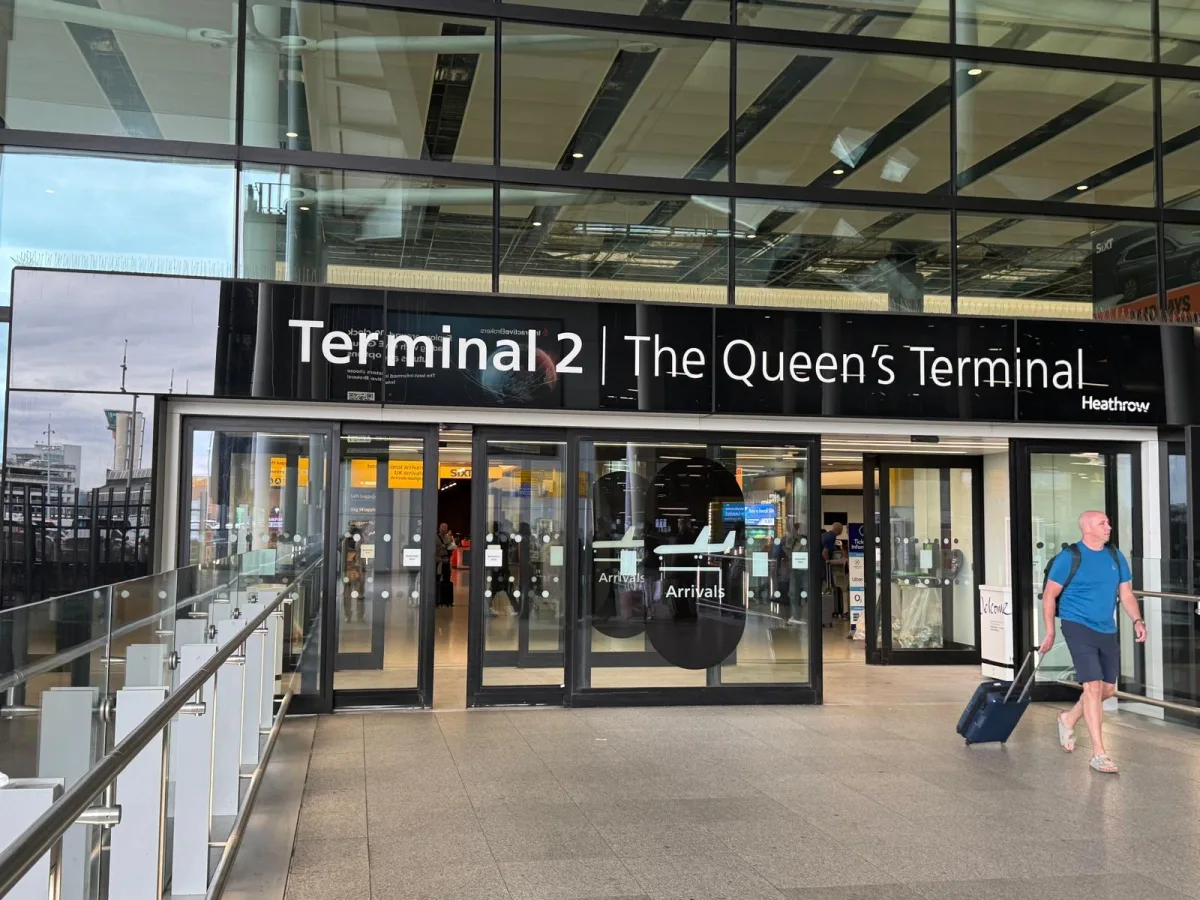
    Arrivals entrance at Heathrow Terminal 2, The Queen's Terminal, with a passenger wheeling a suitcase past the automatic doors
    Arrivals at Heathrow Terminal 2 — where a pre-booked driver meets you, rather than at the charged forecourt outside. Photo: author’s own.

    Key Takeaways

    • A Heathrow airport transfer is reliable when you can verify it before you travel, not when a website says it is.
    • Five checks do most of the work: a private hire operator licence you can confirm with the issuing authority, live flight tracking, a fixed fare inclusive of the £7 terminal drop-off charge, a stated free waiting allowance measured from touchdown, and a named meeting point inside the right terminal.
    • No vehicle collects from the terminal forecourt at Heathrow. Ride-app and private-hire pickups use designated areas in the terminal car parks, and Terminal 4 changed on 23 June 2026.
    • Heathrow’s drop-off charge rose to £7 on 1 January 2026, with a 10-minute maximum stay.
    • Supplying the flight number is what lets an operator dispatch against your actual landing time rather than the schedule.

    In short: a reliable Heathrow transfer confirms the correct terminal and pickup point, uses a licensed operator, records your flight number, states the full fare including airport charges, explains waiting time from actual landing, and gives you a contact that works when you land. Black cabs are the regulated walk-up option. Ride-app and private-hire features vary by product tier, so check the written terms before you book rather than assuming.

    Disclosure

    I should declare an interest before you read further. Alongside editing TripBuffer, I run a licensed private hire operator, Rapid Airport Transfers, which does Heathrow work. I am therefore not a neutral party on the question of which company to book. What follows is the checklist I would apply to any operator, including my own, so you can use it on whoever you are considering. Our editorial policy sets out how we handle this.

    Why reliability means something specific at Heathrow

    Heathrow is not a normal pickup. It is four passenger terminals spread across a site the size of a small town, with a controlled forecourt, a charged drop-off zone, a ten-minute stay limit and rules about which vehicles may collect where. A firm that handles a station run perfectly well can still come unstuck here, and it tends to surface at the worst possible moment — standing in arrivals at 6am with a luggage trolley and no driver.

    So reliability at Heathrow is not a mood or a slogan. It is a set of arrangements that either exist or do not. The useful question is never “are you reliable?”, because every company says yes. The useful question is “what happens if my flight lands ninety minutes late?” The answer to that one separates real operators from booking platforms that resell your job to whoever is cheapest.

    It matters more for some travellers than others. If you are arriving long-haul with checked bags, travelling with children or elderly relatives, catching a 6am departure, or landing after midnight when the rail links have stopped, the cost of getting this wrong is high. If you are a frequent flyer with hand luggage only on a familiar route, you have more slack.

    Your options for getting to and from Heathrow

    Six broad choices, each with a genuine case for it. None is universally best.

    Heathrow transfer options compared Six ways to travel to and from Heathrow, showing whether each can be pre-booked, whether the price is fixed in advance, and whether the driver meets you inside arrivals. Getting to and from Heathrow: six options Green = yes · Amber = varies by product or provider · Grey = no Option Pre-bookable Price fixed Meets inside Pre-booked private transfer Licensed black cab (taxi rank) Minicab / private hire Ride-hailing app Hotel transfer / shuttle Rail, Tube or coach
    How the six options differ on the three things that most affect an airport arrival.

    Pre-booked private transfer. A licensed private hire operator assigns a vehicle to your job in advance, at a price agreed when you book. This is the option that can include meet-and-greet inside arrivals and flight tracking. It costs more than public transport and needs booking ahead, so it is poorly suited to spontaneous travel.

    Licensed black cab. Heathrow has taxi ranks outside each terminal. You do not book, you queue, and the meter runs. The drivers hold the Knowledge and the vehicles are wheelchair accessible as standard. The trade-off is that the fare is not known in advance and rises in traffic, which on a long run into central London can be substantial.

    Minicab or private hire. The broad category that pre-booked transfers sit inside. Quality varies enormously — some operators run their own vehicles and control the job end to end, while others are effectively brokers reselling to whoever is nearest. The five checks further down are mostly about telling those apart.

    Ride-hailing app. Two quite different things sit under this heading, and conflating them is the most common mistake in transfer comparisons. An on-demand request is hailed on arrival: convenient, often cheap off-peak, but the price moves with demand and you walk to the designated pickup area. A reserved airport product is a different proposition — Uber Reserve, for example, can be booked up to 90 days ahead, locks the price upfront and uses your flight details for tracking, and its Exec and Lux tiers have included meet-and-greet in the arrivals hall at all Heathrow terminals since October 2024. Provider product terms, Uber Heathrow, checked 22 September 2026. Features differ by provider and tier, so read the product terms rather than assuming all apps behave alike.

    Hotel transfer. Many Heathrow-area hotels run their own shuttles, and some London hotels arrange cars for guests. Convenient when it fits, though the hotel is usually reselling a transfer operator and taking a margin.

    Rail, Tube or coach. The Elizabeth line, Heathrow Express, the Piccadilly line and National Express coaches all serve the airport. Cheapest by a distance, entirely predictable on price, and genuinely the right answer for a lot of journeys. Less appealing with heavy luggage, very early or very late, or when your destination is nowhere near a station. We compare these directly in our guides to Heathrow to central London by taxi, train and coach and the Elizabeth line versus Heathrow Express.

    Pre-booked transfer vs ride-hailing vs black cab

    Compared on the things that actually differ. Ride apps are split into two columns because an on-demand request and a reserved airport product behave very differently, and treating them as one thing is misleading. None of these is the right answer for everyone, and features change — verify against current provider terms before booking. Provider product terms, checked 22 September 2026.

     Pre-booked private hireRide app: on-demandRide app: reserved airport productBlack cab
    Price known before travelFixed if confirmed in writingUpfront estimate; moves with demandCan be locked when reservedNo — metered
    Can be booked in advanceYesImmediate or short-noticeYes — up to 90 days with Uber ReserveRank only, no booking
    Flight monitoringProvider-dependent; verifyNot part of a standard requestYes on some products, using your flight detailsNo
    Meets you inside arrivalsWhere meet-and-greet is offeredNoOn some premium tiers (Uber Exec and Lux at Heathrow)No
    Choose the vehicle sizeYes, at bookingBy categoryBy categoryOne vehicle type
    Large or multiple suitcasesSpecify when bookingRisk of a vehicle too smallSpecify by categoryGenerally good capacity
    Groups above fourBook a larger vehicleLimited availabilityLarger categories availableUp to five or six
    Where pickup happensAgreed point, operator-dependentDesignated app/private-hire areaDesignated area, or arrivals on meet-and-greet tiersTaxi rank at the terminal
    Free waiting after landingOperator-dependent; get it in writingShort, per the app termsIncluded allowance varies by productNot applicable

    The five checks that predict reliability

    Run these against any operator you are considering.

    What to check before booking a Heathrow transfer A nine-point checklist covering final price, airport fees, meeting point, flight delays, waiting time, luggage capacity, operator licensing, driver contact and cancellation policy. Before you book Nine questions worth asking any Heathrow operator 1. Is the final price clear?Not a “from” price — the figure for your journey. 2. Are airport fees included?Drop-off charge and short stay parking, or added later? 3. Where exactly will the driver meet me?A named point, confirmed in writing. 4. What happens if my flight is delayed?Do they track the flight number you gave them? 5. How much waiting time is included?Measured from landing, or from the scheduled time? 6. Will my luggage actually fit?Count cases, not passengers. 7. Is the operator properly licensed?Ask for the number and who issued it. 8. How do I contact the driver?A number that works on landing, before roaming returns. 9. What is the cancellation policy?How late can you cancel without a fee?
    Save or screenshot this before you book — it works on any operator, not just at Heathrow.

    1. Verify the operator licence yourself

    Anyone who accepts private-hire bookings must hold a private-hire operator licence. The driver and the vehicle also need their own private-hire licences, and the assigned vehicle must be insured for private-hire work. These are three separate things, and an operator licence on its own is not proof of any particular vehicle’s licence or insurance. Taxis — black cabs — are licensed under a different regime again. Government and licensing rule, checked 22 September 2026.

    So the check has two parts. Ask which authority licenses the operator and confirm the licence with that authority directly: in Greater London that is Transport for London, and outside it the relevant council, which you can identify through the gov.uk council finder. Then confirm the assigned driver and vehicle details appear on your booking confirmation. A legitimate company answers both without hesitation — none of it is commercially sensitive. Evasiveness here is the end of the conversation.

    2. Flight tracking has to be real, not a promise

    A transfer fails most often when the driver is dispatched against the schedule rather than the aircraft. Arrival times move — weather, routing and stand availability all shift them, and long-haul is the least predictable. If your driver is sent against the timetable, an early landing means you wait, and a late one means you are billed for waiting you did not cause. Author’s operational observation from running Heathrow transfers, not airport-wide incident data.

    The test is whether the company asks for your flight number when you book. If nobody asks for it, nobody is tracking it.

    The single most useful thing you can do: fill in the flight number field. In my own Heathrow bookings, a missing flight number is a recurring cause of avoidable pickup problems — it is what turns a delayed flight from an expensive problem into a non-event. Author’s operational observation, not airport-wide data.

    3. Fixed price — and what the price is supposed to contain

    A fixed fare removes the two variables you cannot control: traffic and demand. A metered fare climbs while you sit at Junction 14 of the M25 or crawl past the Chiswick Flyover. App pricing climbs with surge, which at Heathrow peaks precisely when everybody needs a car.

    But “fixed” only means something if you know what sits inside it. A complete fixed fare should already absorb the terminal drop-off charge and, on arrivals, the short-stay parking the driver pays while meeting you inside. Ask directly whether those are included or added at the barrier. To sanity-check any quote, our airport transfer cost calculator gives you a baseline.

    4. Cancellation terms and a driver contact that works

    Two things that rarely get checked until they are needed. Find out how late you can cancel without a fee — plans change, and a policy that allows free cancellation up to 24 hours ahead is meaningfully different from one that charges from the moment you book. Get it in writing rather than taking it from a chat window.

    Then make sure you have a number that reaches someone when you land. A booking confirmation with only an email address is no use in an arrivals hall. A direct driver number or a WhatsApp thread is better, and a staffed control-room number better still, because it still works when the driver is parking and cannot answer.

    The Heathrow rules that catch people out

    The drop-off charge changed on 1 January 2026

    Heathrow’s Terminal Drop-Off Charge is now £7 per visit, increased from £6 on 1 January 2026. It applies to every vehicle entering the forecourt drop-off zone at Terminals 2, 3, 4 and 5 — private cars, black cabs and private hire alike. Less widely known: a maximum stay of 10 minutes now applies in those zones. It is a drop-and-go, not somewhere to wait for a passenger still working through security. Official airport rule, checked 22 September 2026.

    For departures this is mostly an accounting question: is the £7 inside your quote or not. For arrivals it matters more, because the forecourt is not where a meet-and-greet pickup happens at all.

    Nothing collects from the terminal forecourt

    The forecourt outside each terminal is for dropping off, not collecting. Ride-app and private-hire vehicles use designated pickup areas in the terminal car parks, and the exact level and zone differ by terminal — follow your provider’s app and the airport signs on the day, because these locations change. Official airport rule, Heathrow passenger pick-up, checked 22 September 2026.

    What that means in practice depends on the product you booked. On an on-demand ride request you walk to the pickup area with your luggage: a minor inconvenience with hand luggage, rather more at 5am with two checked cases, a pushchair and a child who has not slept. On a meet-and-greet service — offered by pre-booked private-hire operators, and by Uber on its Exec and Lux reserved tiers at Heathrow — it works the other way round: the driver parks, walks into arrivals with a name board and takes the trolley.

    Terminal by terminal: what changes where

    After the missing flight number, booking the wrong terminal is the problem I see most often. Heathrow’s terminals are not interchangeable and they are further apart than the map suggests. Author’s operational observation, not airport-wide data.

    Heathrow terminal layout Schematic of Heathrow showing Terminals 2 and 3 together in the Central Terminal Area, Terminal 4 on the southern perimeter and Terminal 5 at the western end, between two parallel runways. How Heathrow is laid out Schematic, not to scale — for orientation only Northern runway Southern runway T5 Western end Own access road T2 · T3 Central Terminal Area Adjacent, walkable between T4 Southern perimeter Separate from the centre road link road link Always check the terminal printed on your boarding pass — airlines do move between them.
    T2 and T3 sit together in the Central Terminal Area. T4 and T5 are separate, each on its own access road.

    Terminal 2, the Queen’s Terminal. In the Central Terminal Area, the main Star Alliance base. Arrivals brings you out into a single concourse, which makes it one of the more straightforward terminals to be met in.

    Terminal 3. Next door to T2 in the Central Terminal Area and walkable between the two landside. Arrivals has more than one exit, so “meet me at arrivals” is genuinely ambiguous here — agree a specific point.

    Terminal 4. On the southern perimeter, physically separate from the central area with its own road approach. Drivers heading to the wrong side of the airport lose real time, so the terminal on the booking matters more for T4 than almost anywhere else. It also changed on 23 June 2026: the multi-storey car park closed and passenger parking moved to Zone A of the Terminal 4 Park & Ride, with a free shuttle every five minutes. A Priority Pick-Up area now sits outside arrivals, charged by duration — £7 for up to 10 minutes, £14 for 11 to 29 minutes, £25 per 30 to 60 minutes. If you last travelled through T4 before that date, do not rely on your memory of it. Official airport rule, changes to Terminal 4, checked 22 September 2026.

    Terminal 5. At the western end, the British Airways and Iberia base, again on a dedicated access road. It is a large building with multiple arrivals routes, and the walk from stand to concourse can be long.

    Pickup arrangements vary between companies, so confirm the exact meeting point with your operator rather than assuming. For how long it takes to move between them, see our guide to Heathrow terminal transfer times.
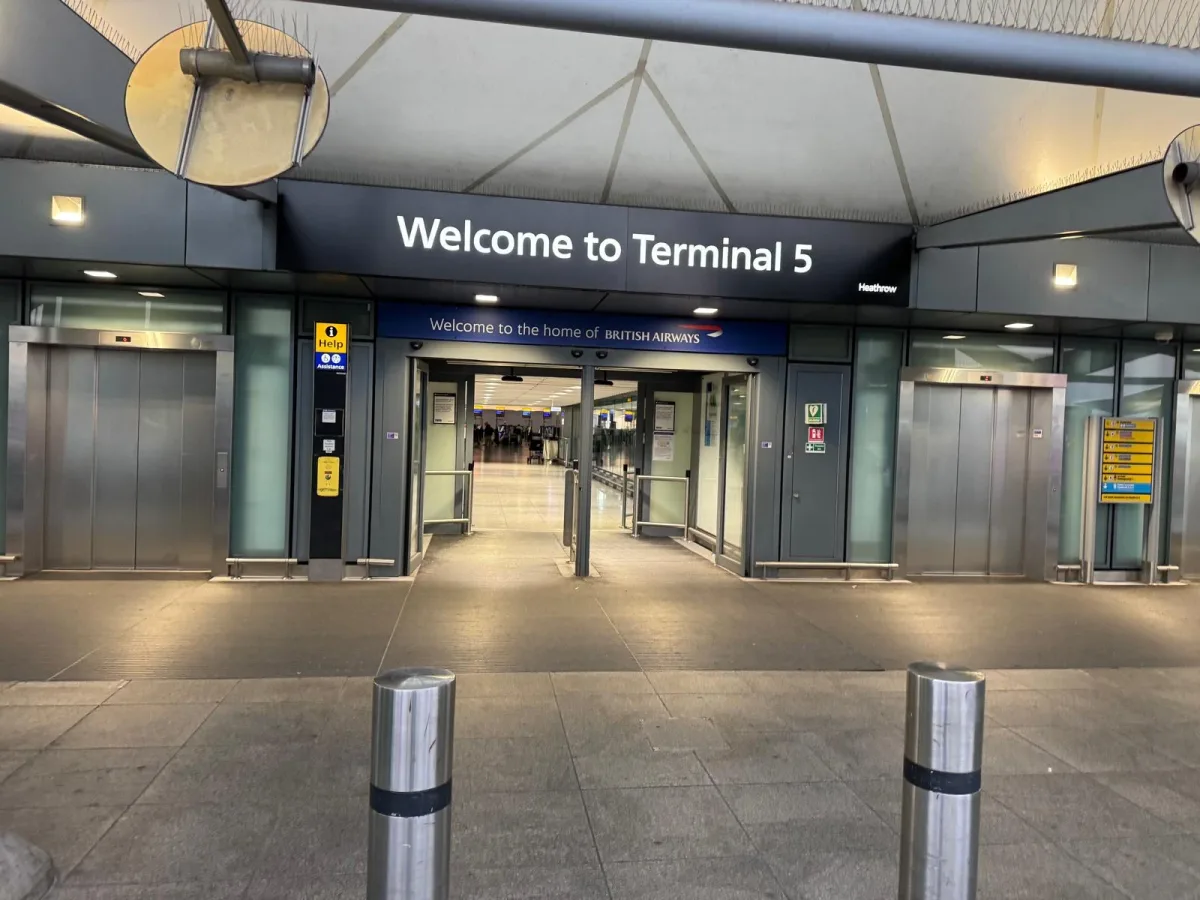
    Entrance to Heathrow Terminal 5 at first light, with the Welcome to the home of British Airways sign above the doors
    Terminal 5 at first light — the western end of the airport, on its own access road. Photo: author’s own.

    Heathrow to central London: why journey times move

    Most road routes into central London use the M4 or the A4, joining the A4 corridor through Hammersmith, or the M25 and then east depending on your destination. The distance does not change. The time does, considerably.

    Three things drive the variation. Traffic is the obvious one: the eastbound morning peak and the westbound evening peak both bite hard on this corridor, and the Chiswick Flyover is a recurring pinch point. Your destination matters more than people expect — the difference between Kensington and Canary Wharf is substantial in a way that “Heathrow to London” hides. And the airport end has its own overhead: getting into the terminal, the drop-off zone, and on arrivals the walk from stand through immigration and baggage reclaim before you even reach the car.

    That last point is the one travellers most often underestimate on departures. The time you need is not the driving time; it is the driving time plus airport processing plus the buffer you want before the gate closes. Our guide on how early to get to Heathrow covers the departures side properly.

    I have deliberately not published specific journey times here. They vary enough by time of day, day of week and destination that a single figure would mislead more often than it helped. Check a live routing tool for your actual departure window, then add contingency.

    Waiting time is the clearest signal there is

    If you compare only one policy between companies, compare this one. Waiting time tells you whether a firm has genuinely planned for the thing that always happens, which is that arrivals do not run to plan.

    Clearing a long-haul arrival at Heathrow means taxiing to stand, disembarking, walking the pier, immigration, baggage reclaim and customs. Forty minutes is unremarkable. An hour is not unusual at a busy arrivals bank. Against that, a grace period of a few minutes is not a waiting policy — it is a billing trigger. Allowances vary widely: a standard on-demand ride request gives you very little, while reserved airport products can include a substantial wait, and pre-booked operators set their own. Check the actual figure in the product terms, confirm it is measured from touchdown rather than the scheduled time, and check whether airline-caused delay is chargeable.

    Common Heathrow transfer mistakes

    • Booking a vehicle too small for the luggage. Count cases, not passengers. Four adults with four large cases do not fit a saloon.
    • Leaving the flight number blank. Nothing can be tracked without it.
    • Confusing arrivals and departures. They are different levels with different access rules.
    • Assuming pickup happens directly outside. Nothing collects from the forecourt. It is either a designated car park area or, on meet-and-greet products, inside arrivals.
    • Not checking whether airport fees are included. The £7 is knowable in advance.
    • No working contact number. Email alone is useless in an arrivals hall.
    • Allowing too little time before a departure. Driving time is not the same as the time you need.

    An example of a pre-booked operator

    Declared interest

    This section is about my own company. Treat it as disclosed self-interest, not an independent review. It is here because it would be odd to publish a checklist and hide the fact that I run one of the things being checked — and because you can hold me to the same five points.

    Rapid Airport Transfers is a licensed and insured private hire operator based in Rickmansworth, Hertfordshire, covering Heathrow alongside Gatwick, Luton and Stansted. Against the five checks: it takes the flight number at booking and dispatches against actual touchdown; quotes a fixed fare inclusive of the £7 drop-off charge and short-stay parking, with no surge and no holiday surcharge; includes 45 minutes of free waiting from landing, with no charge for airline-caused delay; meets passengers inside the correct arrivals hall with a surname board; and will give you the operator licence number and issuing authority if you ask.

    Those are the operator’s own stated terms rather than something TripBuffer has independently audited, and they are set out on its Heathrow service page. Apply the same scepticism you would to any provider: ask for the operator licence number and issuing authority, and get the waiting-time, delay and cancellation terms in writing. Commercial disclosure — operator’s own policy, not independently verified by TripBuffer.

    This is not a claim to be the only company meeting the bar. Plenty do. It is a worked example of what the checklist looks like when an operator answers all five without hedging. Ask the same questions of any competitor and compare the answers rather than the marketing.

    Frequently asked questions

    What makes a Heathrow airport transfer reliable?

    Five verifiable things: a private hire operator licence you can confirm with the issuing authority, live flight tracking tied to your flight number, a fixed fare agreed before travel, a stated free waiting allowance measured from actual landing, and a named meeting point inside the correct terminal. If a company cannot confirm all five in writing at booking, reliability is being left to chance.

    Should I pre-book a taxi from Heathrow?

    Pre-booking is worth it when the cost of a problem is high: long-haul arrivals with checked bags, families, early-morning departures, late-night landings after the rail links stop, or any journey where the fare being predictable matters. For a light, flexible, off-peak trip, walking to the rank or using an app is a reasonable alternative.

    How much is the Heathrow drop-off charge in 2026?

    It is £7 per visit from 1 January 2026, up from £6, and a maximum stay of 10 minutes applies in the forecourt drop-off zones at Terminals 2, 3, 4 and 5. It applies to private cars, taxis and private hire vehicles. Check whether your quote absorbs it or adds it at the barrier.

    How much free waiting time should a Heathrow transfer include?

    Look for an allowance measured from actual touchdown rather than the scheduled landing time, and check whether airline-caused delay is chargeable. Forty-five minutes or more is a sensible benchmark on a long-haul arrival, because immigration and baggage reclaim regularly take that long. Allowances vary a lot by product: a standard on-demand ride gives you very little, reserved airport products can include considerably more, and pre-booked operators set their own terms. Read the figure in writing before you book.

    Where will my driver meet me at Heathrow?

    That depends on the operator and the product, which is why it should be confirmed in writing before you travel. A meet-and-greet service waits inside the arrivals hall, usually with a name board. On-demand ride requests collect from a designated area in the terminal car park, not the forecourt, and Terminal 4 changed its arrangements on 23 June 2026. Terminal 3 and Terminal 5 both have more than one arrivals route, so agree a specific point rather than just “arrivals”.

    Can Uber pick up from the Heathrow terminal forecourt?

    No vehicle collects from the terminal forecourt, which is drop-off only. On a standard on-demand request you walk to the designated app and private-hire pickup area in the terminal car park, with your luggage. On Uber’s reserved Exec and Lux tiers the driver has met riders inside the arrivals hall at all Heathrow terminals since October 2024, as pre-booked private-hire operators with meet-and-greet also do. Pickup areas differ by terminal and change, so follow the app and the airport signs on the day.

    Is a fixed price better than a metered fare to Heathrow?

    For airport travel, usually. A fixed fare removes traffic and surge risk, and a complete one already includes the terminal drop-off charge and car park fees. A meter rises with congestion on the M25 or M4, and on-demand app pricing rises with demand at exactly the hours you need a car — though a reserved airport product can lock the price upfront, so this is not a straight split between pre-booked and app. A metered black cab remains a reasonable option if you value not having to book ahead.

    What vehicle should I book for four suitcases?

    Count the cases rather than the passengers. Four large suitcases will generally not fit a standard saloon alongside four adults, so an estate, MPV or larger vehicle is the safer booking. Tell the operator the number and size of bags, including pushchairs, golf clubs or ski equipment, and let them specify the vehicle. Booking too small is one of the most common transfer failures.

    Are private Heathrow transfers available at night?

    Yes. Licensed private hire operators generally run around the clock, and a pre-booked transfer is often the most practical option for a late-night landing, since the Heathrow Express and Elizabeth line do not run through the small hours and the Piccadilly line has limited night service. Book ahead rather than relying on finding something on arrival.

    Can I book a transfer from Heathrow to another UK city?

    Yes, most private hire operators handle long-distance airport runs as well as London journeys. For longer trips it is worth comparing the fixed fare against rail, particularly to cities with a direct service, because the cost difference grows with distance. A car still tends to win on late arrivals, heavy luggage, groups, or destinations away from a station.

    Related guides

    Sources

    All checked 22 September 2026. Links to the specific rule sit beside the claims they support above; this is the full list.

  • How Early Should You Actually Get to the Airport in 2026?

    How Early Should You Actually Get to the Airport in 2026?

    Traveller checking the time at an airport, illustrating how early you should get to the airport in 2026

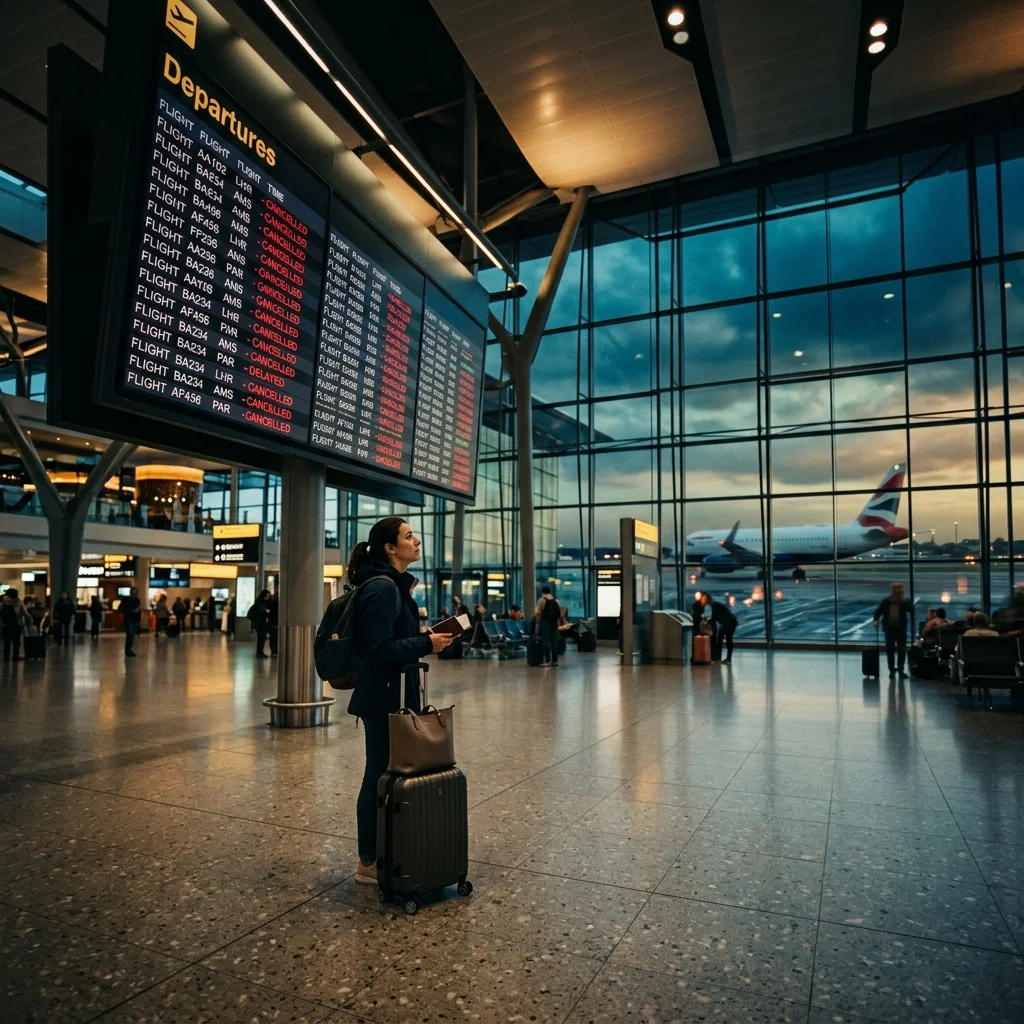
    “Get to the airport three hours early.” It’s the oldest piece of travel advice we’ve got, and in 2026 it’s often wrong — sometimes by a lot. Depending on your airline, your bag situation, the airport and the time of day, three hours can be plenty, or barely enough. Here’s a friendlier way to think about it.

    Why the “3-hour rule” exists

    The three-hour guidance comes from a time when international flights involved long manual document checks at the desk, paper boarding passes and queues that moved slowly. Today, mobile boarding passes, automated passport control and faster bag drop systems have streamlined the whole flow. The three-hour rule sticks around because it’s safe advice for the worst-case scenario, not because it’s the right answer for every flight.

    The honest answer is: you can usually arrive later than you think, but with a buffer that protects you on the days something goes wrong. Let’s break down what actually drives the right timing.

    The factors that actually determine your arrival time

    1. Are you checking a bag?

    If you’re travelling carry-on only and you’ve already got your mobile boarding pass, you can skip the check-in desk entirely and head straight to security. This usually saves 30–60 minutes off your arrival target.

    If you are checking a bag, you’re bound by the airline’s hard cutoffs. Most international flights close baggage drop 60 minutes before departure. If you arrive 55 minutes before your flight, the system simply won’t let you check in, even if the plane is still at the gate. That hard cutoff is what makes “arrive early” advice exist in the first place.

    2. Is it a major hub or a regional airport?

    Walking from security to your gate at a busy hub like Heathrow, JFK or DXB can easily take 15–20 minutes. If you need to take an airside transit train to a satellite terminal, add another 10–15. Regional airports are different — you can often be at the gate within 5 minutes of clearing security, which means an extra 30 minutes of buffer at the front end is just extra time at the cafe.

    3. International vs domestic

    International flights often involve manual visa or passport checks before you reach the security queue. Boarding for large international aircraft usually starts 45–50 minutes before departure, whereas domestic flights might start boarding just 30 minutes prior. That difference adds up.

    4. The time of day

    Airport queues aren’t uniform across the day. Early-morning long-haul departures (5:00–8:00 AM) often see the longest security queues because most of the airport’s daily flights are leaving at once. Mid-afternoon and late-evening flights usually have lighter security flow. If your flight leaves at 7 AM from a busy hub, give yourself the extra buffer; for an 11 AM regional flight, you can be more relaxed.

    5. Time of year

    School holidays, summer peak weeks and the days around major holidays push every queue longer. If you’re flying during one of these windows, add 30 minutes to your arrival target. Off-peak weekday mid-mornings are the easiest time to fly through any airport.

    When you actually need to arrive

    Putting it all together, here’s a friendlier set of guidelines for 2026:

    • Carry-on only, domestic: 1.5 hours before departure
    • Checked bags, domestic: 2 hours before departure
    • Carry-on only, international: 2 to 2.5 hours before departure
    • Checked bags, international: 2.5 to 3 hours before departure
    • Peak holiday travel, any flight: add 30 minutes to the above
    • Major hub early-morning long-haul: add 30 minutes

    Airport-specific arrival advice

    The above is a starting point. Each big airport has its own quirks worth knowing about:

    • Heathrow. Terminal-specific. Terminal 5 has its own train to satellite terminals (B and C) which adds 10–15 minutes; budget for it. More on Heathrow Terminal 5.
    • Gatwick. Generally fast at off-peak; the security queue at South Terminal can build during 5–7 AM departures.
    • JFK. Heavily terminal-dependent. International airlines at T1, T4 and T7 each have different layouts; arrive 20 minutes earlier than you would for a domestic flight. More on JFK terminals.
    • DXB. Big airport, generally efficient flow, but Terminal 2 (low-cost carriers like FlyDubai) feels more like a regional setup. More on DXB terminals.

    What’s actually changed in 2026

    A few quiet improvements over the last couple of years have shifted the maths:

    • Faster security tech. Most major UK airports now use 3D-scan CT systems that let you keep laptops and liquids in your bag. That’s 30–60 seconds saved per passenger, which adds up to meaningfully shorter queues.
    • Automated passport control. e-Gates at major UK and EU airports now accept passport holders from more countries, including most US, Canadian and Australian travellers.
    • Biometric boarding pilots. A handful of airlines and airports are trialling face-recognition boarding that skips boarding-pass scans entirely. It’s not universal yet, but it’s spreading.

    Net effect: the same flight that needed three hours of buffer in 2018 can often be done in 2 to 2.5 hours today, especially with carry-on only.

    What if you arrive too early?

    Arriving early isn’t wasted time if you plan for it. The big hubs have decent food, lounges (paid day-passes from £25–£40), shopping, decent wi-fi and quiet seating. If you’ve got a 3-hour buffer and you cleared security in 20 minutes, that’s two and a half hours of low-stress time. The traveller who arrived 90 minutes before departure and ran into an unusually long queue is the one who paid for that buffer in stress.

    Calculate your exact leave-home time

    “Arrive 2.5 hours early” isn’t useful if you don’t factor in the drive, the parking shuttle, dropping the car off and the walk to the terminal. Use our airport arrival time calculator to work backwards from your flight time, factoring in your bag situation, the airport and the time of day, and get a realistic target for when you should actually leave the house. For getting to the airport, the best time to leave for airport calculator handles the travel-to-airport side of the same question.

    Frequently asked questions

    How early should you get to the airport in 2026?

    It depends on your bag and flight type. A realistic 2026 guide: carry-on only domestic about 1.5 hours; checked bag domestic about 2 hours; carry-on international 2 to 2.5 hours; checked-bag international 2.5 to 3 hours. Add 30 minutes for peak holidays or an early-morning long-haul from a busy hub.

    Is the old 3-hour rule still necessary?

    Not always. The 3-hour rule dates from an era of manual document checks and paper boarding passes. With mobile boarding passes, e-gates and faster CT scanners, many flights that needed three hours in 2018 can be done in 2 to 2.5 hours today, especially carry-on only. It remains safe advice for the worst case.

    How early should I arrive for a domestic flight?

    Around 1.5 hours if you are carry-on only with a mobile boarding pass, and about 2 hours if you are checking a bag. Add time at busy hubs or during peak periods.

    How early should I arrive for an international flight?

    About 2 to 2.5 hours carry-on only, and 2.5 to 3 hours if you are checking a bag, because international flights often add passport or visa checks and earlier boarding.

    Can I arrive 90 minutes before a flight?

    For a domestic flight, carry-on only, with online check-in done, 90 minutes is usually workable at most airports. It is riskier with a checked bag or at a busy hub during peak hours.

    How much earlier should I arrive if I am checking a bag?

    Allow roughly 30 to 60 minutes more than carry-on only, because you are bound by the airline’s bag-drop cutoff rather than just the security queue.

    What time does baggage drop close?

    Most international flights close bag drop around 60 minutes before departure. If you arrive after the cutoff the system will not let you check in, even if the plane is still at the gate, so beat the deadline.

    Does travelling carry-on only let me arrive later?

    Yes. With carry-on only and a mobile boarding pass you can skip the check-in desk and go straight to security, typically saving 30 to 60 minutes off your arrival target.

    How early should I arrive at a big hub versus a regional airport?

    Big hubs like Heathrow, JFK or DXB can mean a 15 to 20 minute walk to the gate, plus an airside train to satellite terminals, so build in extra time. At a regional airport you can often reach the gate within 5 minutes of clearing security. For UK airports specifically, see our Heathrow, Gatwick and Manchester arrival guide.

    How early should I arrive for an early-morning flight?

    Early-morning departures (around 5 to 8 AM) often have the longest security queues because much of the airport leaves at once. Add about 30 minutes to your usual target for an early flight from a busy hub.

    Should I arrive earlier during school holidays or peak season?

    Yes. School holidays, summer peak weeks and the days around major holidays push every queue longer, so add about 30 minutes to your arrival target during these windows.

    What time does the boarding gate close?

    Boarding usually starts 45 to 50 minutes before a large international flight and about 30 minutes before a domestic one. Gates then close around 20 to 30 minutes before departure and will not reopen, so leave time for a long walk to the gate.

    Has airport security got faster in 2026?

    In many places, yes. Most major UK airports now use 3D CT scanners that let you keep laptops and liquids in your bag, and e-gates accept passport holders from more countries. These shave time off queues, which is why arrival times have eased slightly.

    How early should I arrive for a connecting flight?

    A connection depends on the airport’s minimum connection time, plus any terminal change or re-clearing of security. Allow more than the published minimum, and use the TripBuffer Layover Calculator to check whether your connection is realistic.

    What happens if I arrive too late at the airport?

    If you miss the bag-drop or boarding cutoff you can be refused travel even if the plane has not left, and you may have to rebook. The buffer exists to protect you on the day a queue runs unusually long.

  • Hidden Risks of Self-Transfer Flights

    Hidden Risks of Self-Transfer Flights

    Traveller hurrying through an airport with luggage, illustrating the hidden risks of self-transfer flights

    Booking two separate flights on different airlines can save you real money, but it changes the rules of your layover in ways that surprise a lot of travellers. Here’s a friendly guide to what self-transfers actually involve, where the risks sit, and how to make one work smoothly if the savings are worth it.

    What is a self-transfer flight?

    A self-transfer (sometimes called a “hacker fare” or “virtual interlining”) is when you book a journey using two separate tickets, often on different, unaffiliated airlines. Instead of the airline treating your trip as one continuous journey, each airline treats its leg as a completely independent flight.

    Quick self-transfer answer

    Self-transfer flights are risky because the missed-connection problem often becomes yours, not the airline’s. If you are trying to judge whether a short connection is still sensible, use the Layover Calculator and Minimum Connection Time Calculator before you book.

    Hidden riskWhy it catches people outWhat TripBuffer would do
    Separate ticketsMissed-connection protection usually disappearsTreat the trip as two journeys, not one smooth connection.
    Checked baggageReclaim and re-check steps can destroy the apparent bufferAssume the airport process is much longer than the walking time.
    Airport or terminal changesThe visible transfer segment hides the rest of the journey frictionModel the full connection, not just the transport hop.

    Online travel agencies like Kiwi, Skyscanner and Kayak surface these combinations because pairing a low-cost carrier such as easyJet or Ryanair with a major long-haul carrier can yield real savings — sometimes 30–50% off the equivalent through-ticket. The savings are real, but the connection is entirely your responsibility, and that’s where the trade-off lives.

    The 4 main risks of self-transfers

    1. No missed-connection protection

    If your first flight is delayed and you miss your second flight, the second airline isn’t obligated to help you. Because they are separate tickets, you become a “no-show” for the second flight. You will not be rebooked for free; you’ll need to buy a brand-new ticket at last-minute prices, which can be significantly more than your original fare.

    2. The baggage re-check trap

    Your checked bags will not be tagged through to your final destination. When you land, you’ll need to:

    • Clear immigration (if your transit airport is in a different country to your origin)
    • Wait at the baggage carousel to collect your luggage
    • Walk to the departures hall
    • Queue to check your bag with the second airline
    • Clear security and any passport checks again

    This sequence can easily consume 90 to 120 minutes of your layover, even at a well-run airport — and longer at peak times.

    3. Strict check-in cutoffs

    Because you have to re-check your bags, you are bound by the second airline’s check-in cutoff times, usually 45 to 60 minutes before departure. If your layover is two hours but bag drop closes one hour before the flight, you effectively have one hour to deplane, clear immigration, collect a bag and reach the check-in desk. On a busy day that’s optimistic.

    4. Visa and immigration considerations

    Even if you only plan to transit, a self-transfer with checked bags requires you to enter the country legally to collect your luggage. If you don’t have the right visa for your transit country, you can be denied boarding on your first flight. UK travellers transiting through the US, for example, need an ESTA even when they aren’t planning to leave the airport, because they have to clear customs to collect their bag.

    Where self-transfers go wrong: three quick scenarios

    Most missed self-transfers share the same shape. Here are three patterns that come up again and again:

    • The “saved £200” trap. You book Ryanair to a hub airport and a long-haul carrier home, with a tight 2-hour layover. Ryanair runs 40 minutes late (which is normal), you spend 30 minutes at passport control and another 20 at the bag carousel. Bag drop for your long-haul closed 20 minutes ago. You’re now buying a £600 last-minute ticket and the savings vanish.
    • The Heathrow terminal surprise. Your two flights leave from different Heathrow terminals. You hadn’t realised the inter-terminal transfer is 30–45 minutes by free bus, with another security loop at the far end. A 1-hour 45-minute layover becomes a sprint.
    • The visa miss. You book a self-transfer through a country where you assumed you’d stay airside, but you have a checked bag. You’re denied boarding on the first flight because you don’t have a transit visa for the connecting country.

    How to make a self-transfer work

    If the savings are good enough to justify the extra planning, you can make a self-transfer work by following a few simple rules:

    • Travel carry-on only. This is the single biggest fix. No bag carousel, no second check-in queue, no airport-side bag re-check. With a mobile boarding pass for your second flight, you can often stay airside the entire time.
    • Buffer your layover heavily. Don’t attempt a self-transfer with a standard 1.5-hour layover. Aim for at least 3–4 hours for a domestic self-transfer and 4–6 hours for an international one, especially if you’re checking a bag.
    • Check the terminal layout. Read up on the airport before you book. Heathrow terminal transfer times, JFK terminal transfer times and DXB terminal transfer times all have inter-terminal walks that catch people out.
    • Confirm the visa rules. If your transit country requires a visa for entry, you’ll likely need one even with a short layover when you have a checked bag.
    • Book a refundable second leg if possible. Some carriers offer flexible fares that let you push the connection back if your first flight is delayed.

    What to do if you miss your second flight

    If the worst happens, don’t panic. The second airline’s customer-service desk is your first stop, but expect to pay. Here’s a quick playbook:

    • Check the airline’s website for a same-day flight on the same route. Same-day fares on the same airline are sometimes cheaper than walk-up rates at the airport.
    • Ask the gate agent about a “flat tyre” rule. Some airlines (mostly US carriers) will rebook you on the next flight at no charge if you arrive within a couple of hours of a missed flight — it’s an unwritten policy but worth asking.
    • Check your travel insurance. Some policies cover missed-connection costs even on self-transfers if you have a paper trail.
    • Look at trip-protection products before you book. Kiwi and a few other agencies offer a “guarantee” that does cover self-transfer disruption, usually for a small extra fee. Read the terms carefully — coverage varies.

    When self-transfers genuinely make sense

    Self-transfers aren’t always a bad idea. They make a lot of sense when:

    • You’re travelling carry-on only
    • Your layover is long enough that even a major delay can’t kill it (5+ hours)
    • The savings are large enough to absorb a worst-case replacement ticket
    • Your route has no through-ticket option, so it’s self-transfer or nothing
    • You have flexible plans on the other side — a missed connection means a long wait, not a ruined trip

    Frequent flyers use self-transfers all the time. The key is knowing where the risks sit and planning accordingly.

    Check your layover before you book

    The fastest way to sanity-check a self-transfer is to run it through our layover calculator. Tick the “self-transfer” and “checked baggage” boxes and you’ll get an honest read on whether your buffer is comfortable, tight or worth re-thinking. For airport-specific advice, the Heathrow self-transfer guide, JFK self-transfer guide and Dubai Airport self-transfer guide walk through the specifics of each hub.

    Frequently asked questions

    What is a self-transfer flight?

    A self-transfer (also called a hacker fare or virtual interlining) is a journey booked as two separate tickets, often on unaffiliated airlines. Each airline treats its leg as an independent flight, so the connection between them is entirely your responsibility, not theirs.

    Are self-transfer flights worth it?

    They can be. Pairing a low-cost carrier with a long-haul airline can save 30 to 50% versus a through-ticket. The savings are real, but you take on all the connection risk, so they suit travellers who can build in a big buffer and ideally travel carry-on only.

    What is the biggest risk of a self-transfer?

    Losing missed-connection protection. Because the tickets are separate, if your first flight is delayed and you miss the second, the second airline treats you as a no-show and is not obliged to rebook you for free.

    What happens if I miss my connection on a self-transfer?

    You become a no-show for the second flight and usually have to buy a brand-new last-minute ticket, which can cost far more than your original fare and can wipe out the savings entirely.

    Do I have to collect my bags on a self-transfer?

    Usually yes. Your checked bags are not tagged through, so you must clear immigration, collect your luggage, go to departures, re-check your bag with the second airline and clear security again.

    How long does the baggage re-check take?

    The full reclaim and re-check sequence can easily take 90 to 120 minutes even at a well-run airport, and longer at peak times. This is why the visible layover can be far shorter than it looks.

    How much layover should I leave for a self-transfer?

    Do not attempt one with a standard 1.5-hour layover. Aim for at least 3 to 4 hours for a domestic self-transfer and 4 to 6 hours for an international one, especially if you are checking a bag.

    Can I do a self-transfer with carry-on only?

    Yes, and it is the single biggest fix. With carry-on only and a mobile boarding pass for the second flight you can often stay airside the whole time, avoiding the bag carousel and second check-in queue.

    Do I need a visa to transit on a self-transfer?

    If you have a checked bag you must enter the country to collect it, which means you need the right transit or entry permission. UK travellers connecting through the US, for example, need an ESTA even if they never planned to leave the airport.

    Does travel insurance cover a missed self-transfer connection?

    Standard travel insurance often does not cover a missed connection between two separate tickets, because you booked them independently. Some policies offer specific missed-connection or self-transfer cover, so check the wording before you rely on it.

    How do I check if my self-transfer layover is long enough?

    Model the full airport process, not just the walking time. Our Layover Calculator and Minimum Connection Time Calculator help you judge whether a connection is realistic before you book.

    Are booking sites like Kiwi and Skyscanner self-transfers?

    They often surface self-transfer combinations to find the cheapest route. Some, such as Kiwi.com, offer their own connection guarantee for itineraries booked through their platform, but a self-transfer you assemble yourself from separate tickets has no such protection.

    Does a different terminal make a self-transfer harder?

    Yes. If your two flights use different terminals you may face a 30 to 45 minute inter-terminal transfer and a second security check, which can turn a comfortable-looking layover into a sprint. For UK connections, see our Heathrow self-transfer guide.

    Is a 2-hour layover enough for a self-transfer?

    It is risky, especially with checked bags. A two-hour layover can disappear quickly once you add a delayed first flight, passport control and the bag carousel, and bag drop for the second flight typically closes 45 to 60 minutes before departure.

    How can I make a self-transfer safer?

    Travel carry-on only, leave a generous buffer of 3 to 6 hours, choose an early-in-the-day first flight so you have rebooking options if it is delayed, check whether your flights use different terminals, and make sure you have any transit visa or ESTA you need.