
Last updated: August 5, 2026
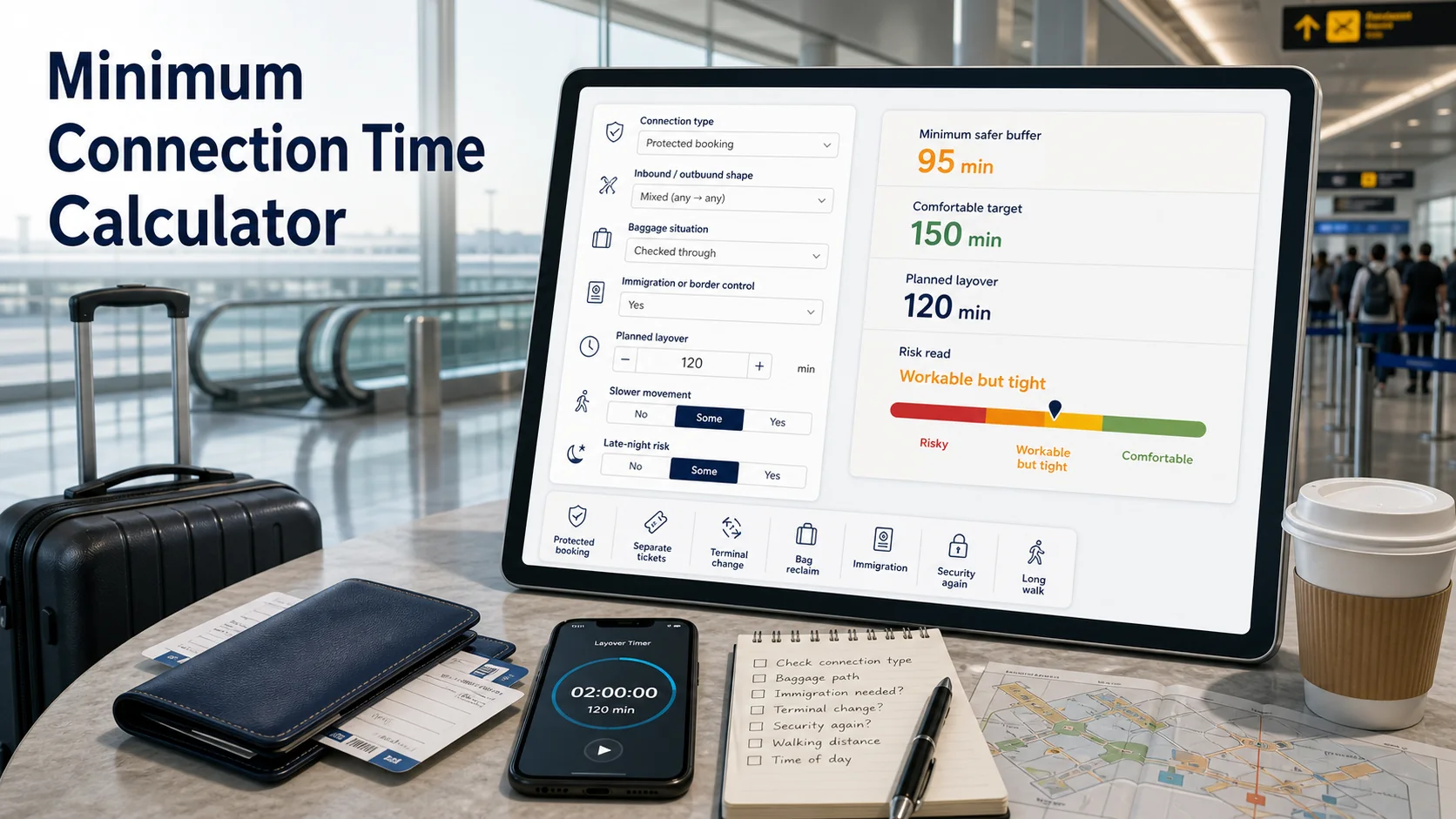
Use the minimum connection time calculator below to estimate a safer booking buffer based on ticket protection, baggage, immigration and terminal complexity before you rely on a short connection.
Estimate Your Safer Connection Buffer
Use the planner below to move beyond raw minutes. Ticket protection, baggage, terminal changes and immigration often matter more than the headline layover time.
Your connection estimate
Quick answer
The safer minimum connection time is often much larger than the legal or technical minimum. Same-terminal protected bookings can work with lighter buffers, while separate tickets, terminal changes, baggage reclaim and airport changes can push the safe booking floor much higher.
How to read the result
| Result | What it means | What to do next |
|---|---|---|
| Minimum safer buffer | This is the booking floor TripBuffer would treat as more realistic than an optimistic transfer guess. | Use it before booking a short connection or separate-ticket plan. |
| Comfortable target | This is the healthier target once you add a bit of breathing room above the floor. | Use it when the trip matters, the airport is unfamiliar or the connection is not protected. |
| Risk read | This compares your planned layover with the safer buffer and the more comfortable target. | If you see Risky or Workable but tight, read the airport-specific guides before you commit. |
What changes minimum connection time most
- one protected booking versus separate tickets
- same terminal versus a terminal change or airport change
- carry-on only versus reclaiming and re-checking bags
- whether immigration, security or long walking distances add more hidden friction
Worked examples
Example 1: A same-terminal protected connection with carry-on only can still feel reasonable at a lower buffer than a separate-ticket self-transfer, because the airport process is doing more of the work for you.
Example 2: A separate-ticket connection that includes baggage reclaim and a terminal move often looks manageable on paper but needs a much larger booking buffer once you treat it like a full arrival and new departure.
TripBuffer note
If you are connecting through Heathrow, use the Heathrow Self-Transfer Guide and Heathrow Terminal Transfer Times page after using this tool.
Methodology
TripBuffer uses public airport and airline guidance as a baseline, then adds the real friction that standard minimum connection rules often hide. That means ticket protection, terminal complexity, baggage reclaim, immigration and airport-change risk all matter more than the raw layover minutes on their own.
Official sources
- Heathrow connecting flights
- Heathrow connection FAQs
- TSA arrival guidance
- American Airlines check-in and arrival guidance
FAQs
Is this an official airline minimum connection time tool?
No. It is a TripBuffer planning calculator. Airlines and airports may publish or enforce their own official minimum connection times, but this tool is built to estimate a safer real-world buffer.
Why are separate tickets so different from one protected booking?
Separate tickets usually shift the missed-connection risk onto you. Once baggage reclaim, check-in and security are added back in, the safe connection time often becomes much larger than the terminal move alone.
Can this calculator help with Heathrow self-transfers?
Yes. Heathrow is one of the clearest cases where terminal movement, baggage and separate-ticket risk can make a short connection look safer on paper than it really is.
What should I do after using this calculator?
Use it to judge a safer booking buffer, then check the related airport-specific guides if you are connecting through Heathrow or dealing with baggage, terminal changes or airport changes.

Reviewed by Muhammad Umar Khan
Founder and editor of TripBuffer. Reviewed against official airport, airline and transport-provider information. For our research standards, see the Editorial Policy.