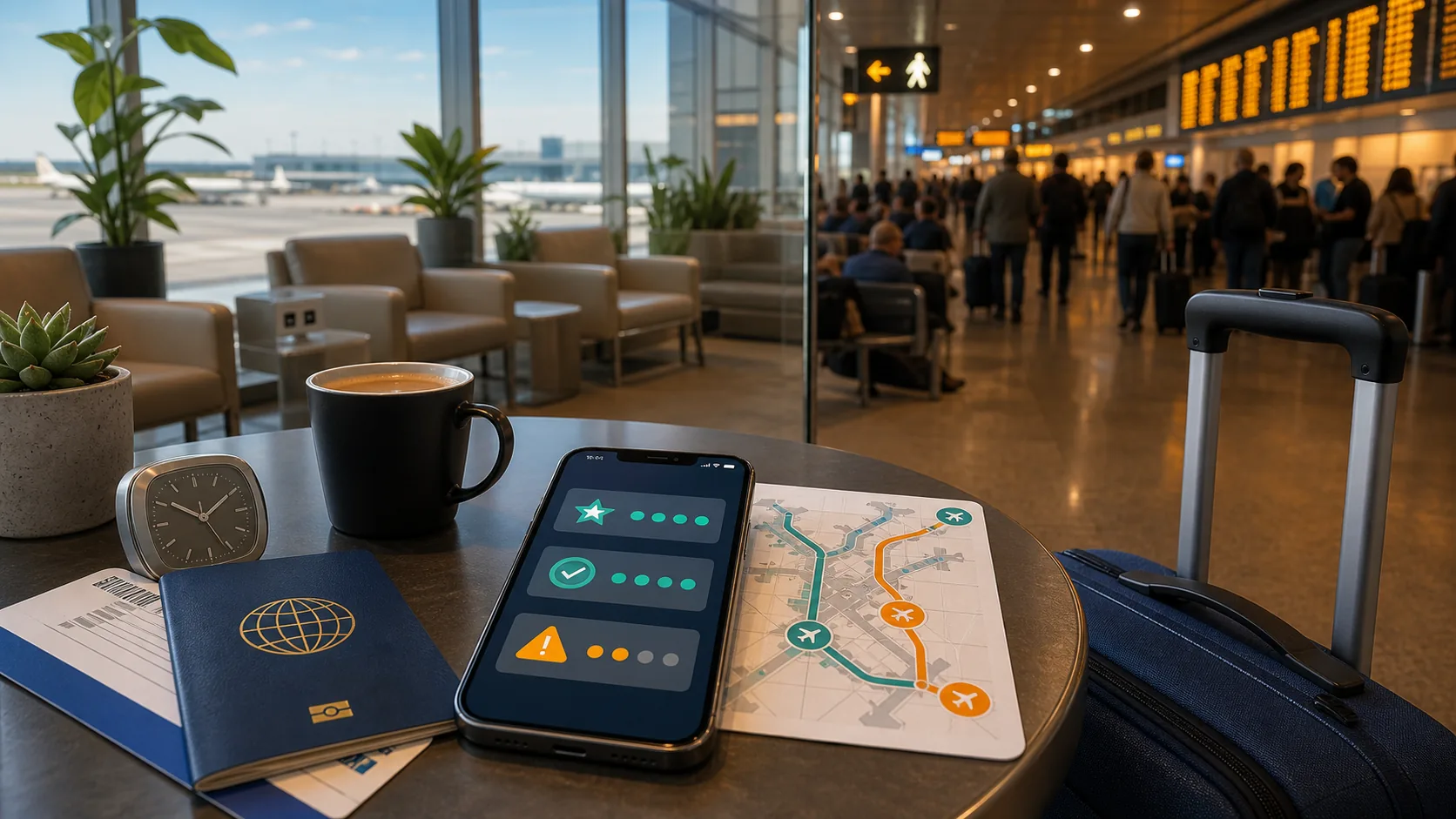
Not all layovers are created equal. The same 90-minute connection is comfortable at one airport and a sprint-to-the-gate gamble at another — and the difference has almost nothing to do with the number on your ticket. It’s the airport’s design: one terminal or five, an airside transfer or a landside shuttle bus, whether you re-clear security, and whether a passport queue sits between your two flights. This guide compares the best and worst airports for connecting flights — the ones that make a short layover easy, and the ones where a tight connection goes wrong — built around why, not just a list of minimum times.
One thing up front: this ranks airports for making a connection, not for enjoying a long layover. If you want lounges, sleeping pods, showers or a city day-trip on a long stopover, that’s a different question and a different guide — here the whole focus is getting from one flight to the next without missing it.
The short answer
- Easiest airports for connecting flights: single-terminal or well-linked hubs where an airside transfer keeps you inside security — think Amsterdam Schiphol, Singapore Changi and Atlanta.
- Worst airports to connect through: sprawling multi-terminal airports with landside shuttle-bus transfers, and anywhere that forces you to re-clear immigration and security — classically a US international-to-domestic connection.
- The number that matters is the airline’s minimum connection time for your exact route — treat any tight connection with caution and add margin on top.
What makes an airport good or bad for a layover?
Five things decide it: terminal count, how you move between terminals, whether you stay airside, whether you re-clear security or immigration, and how reliable the airport is on time.
Before any airport name, it’s worth knowing the levers — because they let you judge a connection anywhere, even one not listed here:
- Terminal design. A single terminal (or piers under one secure roof) means short, predictable walks. Multiple separate terminals mean trains, shuttles and the risk of a long transfer.
- How you get between terminals. A fast airside train (like Atlanta’s Plane Train) is minutes; a landside shuttle bus that leaves security and comes back is the enemy of a tight connection.
- Do you stay airside? If your transfer keeps you inside security, you save the whole screening step. If it dumps you landside, you re-queue for security — often the single biggest time sink.
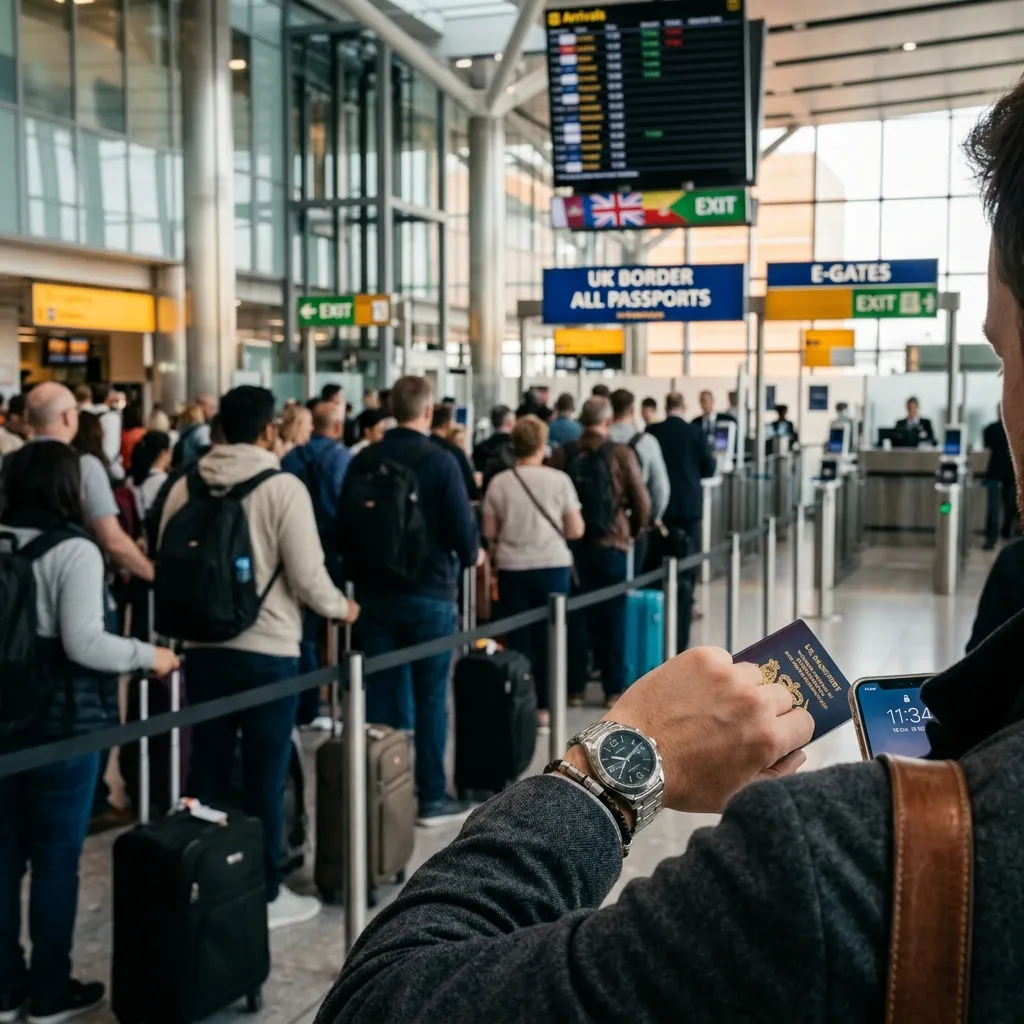
- Immigration in the middle. Any connection where you clear passport control between flights inherits that airport’s queue, which can be an hour or more at peak.
- On-time reliability. A punctual airport protects tight connections; a congestion-prone hub eats your buffer before you even land.
How we compare: this is an editorial connection-ease assessment based on each airport’s published terminal layout and transfer process plus the levers above — not a scored ranking pulled from a single dataset. Airport-wide punctuality doesn’t predict your specific airline, route or time of day, so always check your own itinerary’s minimum connection time before you trust a tight layover.
Best airports for connecting flights (easiest short layovers)
These are strong examples of connection-friendly hubs — not an exhaustive or scored ranking. Their design does the work for you; none of it guarantees a smooth transfer, but the odds are in your favour.
| Airport | Why it’s forgiving |
|---|---|
| Amsterdam Schiphol (AMS) | One giant terminal under a single roof, so walks are short and clearly signed. Many Schengen-to-Schengen connections stay airside. Crossing between the Schengen and non-Schengen areas means passport control, and depending on where you flew from you may also pass another security check — so the exact steps vary by route. |
| Singapore Changi (SIN) | Terminals 1, 2 and 3 are linked airside by a free Skytrain and moving walkways (Terminal 4 by shuttle bus), and the airport is built around transfer passengers, so terminal changes stay quick. Connecting passengers still pass a security screening before the onward gate. |
| Atlanta (ATL) | Enormous, but a fast airside Plane Train links every concourse in minutes, so you rarely re-clear security on a domestic connection. |
| Munich (MUC) / Zurich (ZRH) | Compact, single-complex layouts with short airside transfers between piers — a shuttle or underground link between terminals rather than a long landside trek — so a modest buffer usually holds on a Schengen connection. |
| Tokyo Haneda (HND) | Well-organised transit with short internal distances for its size; free inter-terminal shuttles, a monorail link and an underground walkway connect the terminals, with clearly signed connecting routes. |
The common thread: you stay inside security and move within one connected building. Whenever that’s true, a tight connection is far safer — regardless of the airport’s overall size.
Worst airports for connecting flights (where tight layovers go wrong)
These are examples of structurally harder airports to connect through — not a definitive “worst” list, and several are excellent to fly from. They’re simply harder to connect through, usually because of terminal changes, shuttle transfers or an immigration and security re-check in the middle.
| Airport | Why connections get risky |
|---|---|
| London Heathrow (LHR) | Excellent airport, but a change of terminal (say T5 to T2/T3) can add substantial time via transfer buses or long walks. Same-terminal connections are fine; cross-terminal ones need a real buffer. |
| Paris Charles de Gaulle (CDG) | Sprawling, multi-terminal layout with shuttle transfers and confusing signage. A short connection across terminals is a classic missed-flight story. |
| Chicago O’Hare (ORD) | An international arrival into Terminal 5 still means the full US entry process (immigration, bag reclaim, re-check). A secure airside bus links T5 to Terminals 1 and 3, but a busy arrivals bank plus the terminal change eats time. |
| Frankfurt (FRA) | Big and spread out with long walks and occasional bus gates; connections are doable but rarely quick, and security re-checks are common. |
| Any US hub, international → domestic | Usually the full immigration + bag reclaim + re-check + security sequence — unless you flew from a US Preclearance airport. See below. |
The connection that catches everyone: arriving internationally in the US
On most international-to-domestic connections in the US, you clear immigration, collect your checked bag, re-check it and pass security again — even though you never leave for the city. The big exception is flying from a US Preclearance airport, where you complete US entry before departure and arrive as a domestic passenger.
This is the single most misjudged layover in travel, and it’s not really about which airport — it’s the US arrival process itself. At a first US point of entry the normal sequence is passport control, baggage reclaim, bag re-check, then a fresh security screening, often in a different terminal. During a busy arrivals bank that easily eats 90 minutes or more. So if you’re connecting onward in the US after an international flight and you did not come through Preclearance, treat any sub-two-hour connection as tight and anything under about 90 minutes as a genuine gamble.
Separate tickets make it worse. If your two flights are on different bookings (a self-transfer), no airline protects the connection — a missed onward flight is your cost, and you’re re-checking bags in the middle regardless. Read the hidden risks of self-transfer flights before booking one.
The Preclearance exception. If your flight departs a US Preclearance location — Dublin, Shannon, Abu Dhabi, Nassau, Aruba, Bermuda or a major Canadian airport such as Toronto, Vancouver or Montreal — you clear US immigration and customs at the departure airport and land in the US as a domestic arrival. When your bags are checked through on a single itinerary you skip the reclaim-and-recheck at your connecting hub; on separate tickets you may still have to collect and re-check them. Either way it turns a stressful US connection into a much simpler one, so it’s worth choosing a routing through one of these when you can. CBP lists the current Preclearance locations.
How to protect a tight layover anywhere
- Find the official minimum connection time. Airlines and airports publish an MCT for each route — the shortest connection their booking rules will sell and protect for that itinerary. It is not a legal guarantee or a comfortable buffer, so if your connection is near it, treat it as tight and add margin.
- Ask three questions: Do I change terminals? Do I re-clear security? Do I clear immigration? Every “yes” adds meaningful time.
- Book it on one ticket where you can. On a single, protected itinerary the airline will normally rebook you at no charge when an eligible inbound delay makes you misconnect — though exactly what you’re owed depends on your ticket, the operating carriers and the cause. It is still far safer than a self-transfer, where the risk is entirely yours.
- Carry on if the connection is short. No checked bag removes the reclaim-and-recheck step entirely on many connections.
- Run the numbers. Drop your real layover into the layover calculator — it weighs terminal changes, security, immigration and self-transfer risk so you can see whether the gap is safe, tight or risky before you book.
From the driver’s seat: what I see travellers get wrong about connections
I run an airport-transfer business around London’s airports, so I meet the downstream of a misjudged connection all the time — usually the traveller who booked a tight self-transfer between Heathrow, Gatwick or Stansted and didn’t realise their two flights were never on one ticket. A few patterns come up again and again:
- A terminal change gets treated as a quick hop. At Heathrow, going from Terminal 5 to Terminal 2 or 3 is a proper journey — a transfer and another security queue, not a five-minute walk. People routinely under-budget it.
- The “London layover” that’s really a self-transfer between airports. Landing at Heathrow and flying out of Gatwick (or the reverse) on separate tickets is the trip I’m most often asked to do under pressure. By road it’s typically 60–90 minutes in light traffic, and a good deal more around the M25 at peak — and that’s before you check in and clear security again at the second airport. Honestly, it needs the best part of a day, not a two-hour gap.
- Nobody budgets the ground half. The flight timetable never shows immigration queues, bag reclaim, the walk to the transfer or the traffic. Those are exactly the bits that make people miss the second flight — and the bits I plan around every day.
None of this replaces the airline’s minimum connection time; it’s the on-the-ground reality the timetable hides. The global rankings above are research-based — this London section is the part I actually live. If your “connection” means changing airports in London, plan it like the mini-trip it really is.
Written from first-hand experience running airport transfers around London; the airport comparisons above are research-based.
Related guides and tools
- Layover Calculator — is your connection safe, tight or risky?
- Airport Arrival Time Calculator — how early to arrive for a departure
- Hidden Risks of Self-Transfer Flights
- Airport connection guides by hub
- All layover and airport guides
FAQs
What are the best airports for layovers?
Single-terminal or well-connected hubs where you stay airside and don’t re-clear security tend to be best — for example Amsterdam Schiphol, Singapore Changi and Atlanta (via its airside Plane Train). Design, not size, is what makes a connection easy.
What are the worst airports for layovers?
Sprawling multi-terminal airports with shuttle-bus transfers, and any connection that forces you to re-clear immigration and security. Paris Charles de Gaulle, cross-terminal changes at London Heathrow, and international-to-domestic connections at US hubs are common trouble spots.
Why is connecting in the US so slow?
On a normal international arrival you clear immigration, collect your checked bag, re-check it and pass security again before your onward domestic flight — even though you’re only connecting, and during a busy arrivals bank that can take 90 minutes or more. The exception is arriving from a US Preclearance airport, where you complete US entry before departure and connect as a domestic passenger.
How much layover time do I need?
It depends on whether you change terminals, re-clear security and clear immigration. As a rough guide, a same-terminal domestic connection can work in under an hour, while an international-to-domestic connection in the US often needs two hours or more. Always check the airline’s minimum connection time and run your specific case through a layover calculator.
What is a minimum connection time?
It’s the shortest gap an airport or airline will sell and protect between an arriving and a departing flight for that itinerary. It is not a legal guarantee or a recommended comfort buffer, so if your layover is at or near the minimum, treat it as tight and add margin.
Does staying airside really matter?
Yes. If your transfer keeps you inside the secure zone, you skip re-screening entirely — usually the biggest time saving on a connection. Being sent landside means queuing for security again.
Do I have to go through security again for a connecting flight?
It depends on your route. On an airside transfer within one secure area you don’t; if your onward terminal isn’t airside-connected, you leave the secure zone, or you clear immigration into a new country, you re-screen. At a first US entry you always re-clear security — unless you flew from a Preclearance airport.
Do I have to collect bags on a connecting flight in the US?
On a normal international arrival, yes — you reclaim your checked bag, re-check it and pass security again, even just to connect. Flying from a US Preclearance airport (Dublin, Shannon, Abu Dhabi, Nassau, Aruba, Bermuda or a major Canadian airport) lets you connect as a domestic passenger; with bags checked through on one itinerary you skip reclaim, but on separate tickets you may still have to collect and re-check them.
Sources and checked dates
Airport assessments reflect each operator’s published terminal layout and transfer process; the US arrival sequence and its exception follow US Customs and Border Protection. Each airport in the tables links to its official transfer page below, all checked September 2026:
- US arrival & the Preclearance exception — CBP Preclearance
- Amsterdam Schiphol transfers — Schiphol
- Singapore Changi terminal transfers — Changi Airport
- Atlanta Plane Train — Hartsfield-Jackson Atlanta
- Munich connecting flights — Munich Airport
- Zurich transfer — Flughafen Zürich
- Tokyo Haneda connecting flights — Haneda Airport
- London Heathrow connections — Heathrow
- Paris Charles de Gaulle connecting flights — Paris Aéroport
- Chicago O’Hare connecting traveler — Fly Chicago
- Frankfurt transferring at FRA — Frankfurt Airport
- Global connectivity methodology (context) — OAG Megahubs
Minimum connection times are set by airlines and airports for each route — always confirm yours. This is an editorial connection-ease comparison and general, experience-based guidance, not a guarantee for any specific flight. Last updated 5 September 2026.