Category: Passenger Rights

  • Delayed & Lost Baggage Compensation: Your Rights (2026)

    Delayed & Lost Baggage Compensation: Your Rights (2026)

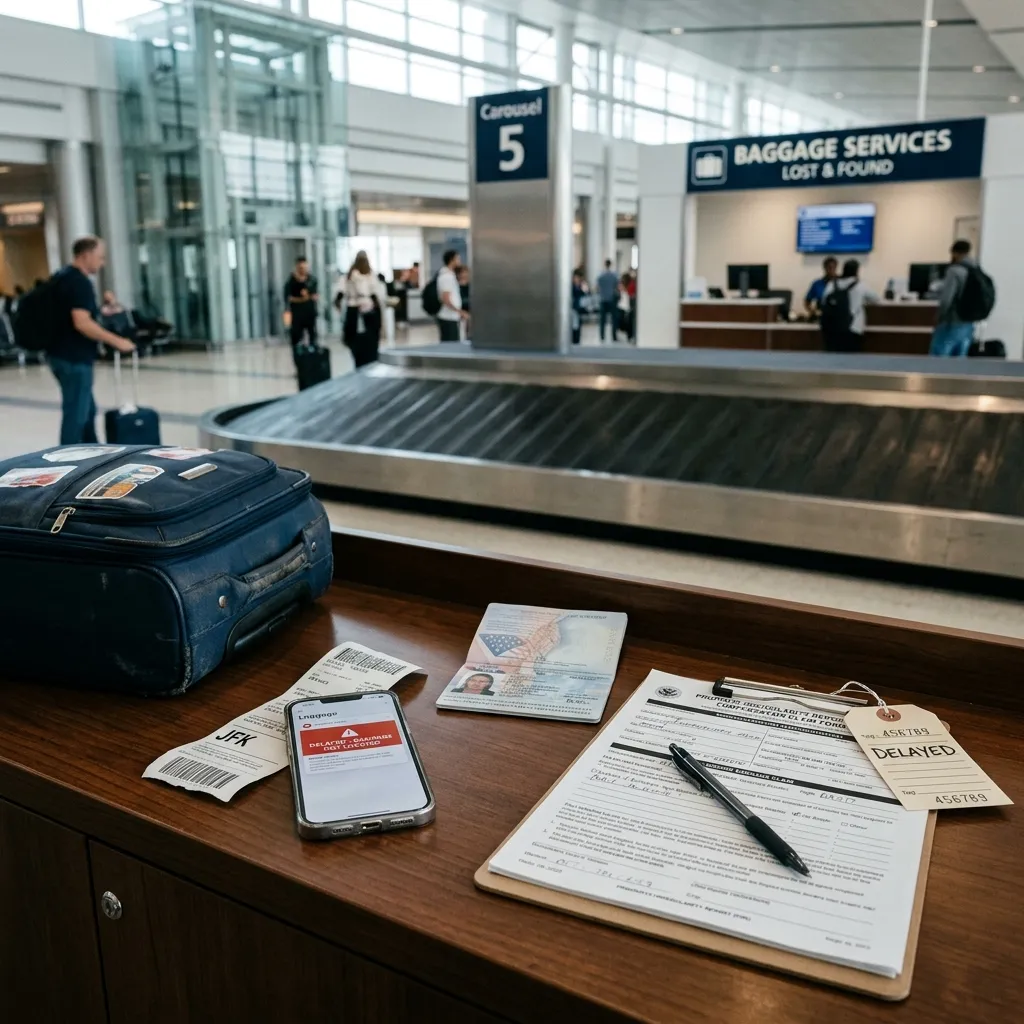
    Unclaimed suitcase on an airport baggage carousel, illustrating delayed and lost baggage compensation claims
    Published 14 July 2026 · verified July 2026; US baggage limit rechecked 2 September 2026

    If an airline delays, loses or damages your checked bag, you can claim compensation under the Montreal Convention — up to 1,519 SDR per passenger (about £1,500 / $2,000). But it isn’t a fixed payout: you claim your actual proven costs up to that cap, the clock starts ticking the moment you land, and one form at the airport can make or break your claim. Here’s exactly how delayed baggage compensation works in 2026, and how to claim for a lost or damaged bag too.

    Quick answer: baggage compensation

    • File a PIR (Property Irregularity Report) at the airport before you leave — this is the step people skip and regret.
    • Delayed bag: claim reasonable essential expenses (toiletries, clothes) — keep every receipt.
    • Lost bag: generally treated as lost after 21 days; claim the value of the contents.
    • The cap is 1,519 SDR (~£1,500 / $2,000) per passenger for delay, loss and damage combined — it’s your actual loss, not an automatic sum.
    • Deadlines: damaged → 7 days; delayed → 21 days; legal action → 2 years.

    First, before you leave the airport: file a PIR

    Report the problem at the airline’s baggage desk and get a Property Irregularity Report (PIR) before you leave the baggage hall.

    The Property Irregularity Report is the single most important step, and it’s easy to miss when you’re tired and just want to get home. Go to the airline’s Lost & Found / baggage services desk in the arrivals hall and report that your bag didn’t arrive or was damaged. They’ll create a PIR with a reference number — that’s your proof that you reported the problem in time, and most airlines won’t process a claim without it. Take a photo of the report and the reference before you leave.

    Delayed baggage compensation

    If your bag is delayed, you can claim the reasonable cost of essentials you had to buy while you waited for it.

    A delayed bag is the most common problem, and the airline is liable for the necessary expenses you run up because you don’t have your things — toiletries, underwear, a change of clothes, phone charger and similar essentials. The rules to remember:

    • Keep every receipt — you claim actual costs, so no receipt usually means no reimbursement.
    • Buy reasonably. Replacing a toothbrush and a few basics is fine; a designer wardrobe is not, and will be refused.
    • Report in writing within 21 days of finally receiving the bag.
    • If you’re away from home, your need for essentials is greater than at your home airport, and airlines know this.

    Submit the delayed baggage claim to the airline with your PIR reference, receipts and boarding pass. The compensation comes out of the same 1,519 SDR cap that covers loss and damage.

    Lost luggage compensation

    If your bag never turns up, you claim the value of its contents, up to the 1,519 SDR limit.

    There’s no single global rule for when a delayed bag officially becomes “lost”, but most airlines treat it as lost after 21 days. At that point your claim shifts from expenses to the value of what was inside. To give your lost luggage claim the best chance:

    • Itemise everything in the bag, with approximate values and dates of purchase.
    • Provide proof of value where you can — receipts, bank statements, photos of expensive items.
    • Include the value of the suitcase itself, not just the contents.
    • Remember the cap is per passenger, so a couple who each checked a bag have a combined limit.

    Don’t pack valuables in checked luggage. Airlines routinely exclude or limit liability for cash, jewellery, electronics, important documents and fragile items. If it’s valuable or irreplaceable, it belongs in your hand luggage.

    Damaged luggage compensation

    Report damage within 7 days and the airline should repair or reimburse the bag.

    If your case arrives cracked, torn or with wheels or handles broken, the airline is liable — but the deadline is tight. You must report damaged baggage in writing within 7 days of collecting it. Photograph the damage before you leave the airport if you can, and keep the bag; the airline may want to inspect it or arrange a repair. Normal wear and tear, and minor scuffs, are usually excluded.

    How much can you claim?

    All three — delay, loss and damage — share a single ceiling under the Montreal Convention:

    What happenedWhat you claimMaximum
    Delayed baggageReasonable essential expenses while you wait1,519 SDR per passenger — about £1,500 / $2,000 — for delay, loss and damage combined
    Lost baggageThe value of the bag and its contents
    Damaged baggageRepair, or the value of the bag

    The limit rose from 1,288 SDR to 1,519 SDR on 28 December 2024, so ignore older guides still quoting the lower figure. SDR is an international currency unit that converts at the daily exchange rate, which is why the pound and dollar equivalents shift slightly. Crucially, this is a maximum for proven loss — not a guaranteed payout — so the quality of your evidence decides what you actually receive.

    The deadlines that make or break a claim

    ActionDeadline
    Report the problem at the airport (PIR)Before you leave the baggage hall
    Written claim for damaged baggageWithin 7 days of receiving it
    Written claim for delayed baggageWithin 21 days of receiving it
    Baggage treated as lostGenerally after 21 days missing
    Take legal action if the airline refusesWithin 2 years of arrival

    US flights: a higher limit for domestic trips

    The Montreal Convention covers international flights. For US domestic flights it doesn’t apply — instead the Department of Transportation sets a higher minimum liability, currently $4,700 per passenger. So a domestic US baggage claim can actually be worth more than an international one, though the same principle applies: you claim actual, proven loss, and you must report promptly.

    How to claim, step by step

    1. File the PIR at the airport before you leave — get the reference number.
    2. Keep everything — receipts for essentials, the damaged bag, boarding passes.
    3. Submit a written claim to the airline within the deadline (7 days damaged, 21 days delayed), quoting the PIR reference.
    4. Itemise and evidence your losses — the better the proof, the higher the payout.
    5. Escalate if refused — to the airline’s dispute resolution scheme, the CAA in the UK, or the courts within 2 years.

    Airline claim vs travel insurance

    You can claim from the airline under the Montreal Convention and from your travel insurance — but you can’t be paid twice for the same loss. In practice, travel insurance is often faster, may cover more (including items the airline excludes), and usually has its own delayed-baggage benefit that pays out after a set number of hours. A common approach is to claim essentials from insurance quickly, and pursue the airline for the larger loss. Check both policies’ limits and deadlines.

    Worked example

    Your bag is delayed for four days on a trip to Spain. You file a PIR on arrival, then spend £180 on essentials — toiletries, a couple of outfits, swimwear — keeping every receipt. When the bag arrives, you submit a written claim within 21 days with the PIR reference and receipts. The airline reimburses the reasonable essentials, well within the 1,519 SDR cap. Had you thrown the receipts away, or skipped the PIR, the claim would have been far harder to win.

    Related guides and tools

    FAQs

    How much compensation for delayed baggage?

    You can claim your reasonable essential expenses while you wait, up to the Montreal Convention cap of 1,519 SDR (about £1,500 / $2,000) per passenger, which covers delay, loss and damage combined. It’s actual proven cost, not a fixed sum, so keep your receipts.

    How much compensation for lost luggage?

    The value of your bag and its contents, up to 1,519 SDR (about £1,500 / $2,000) per passenger. Itemise everything and provide proof of value to get the highest payout.

    What is a Property Irregularity Report (PIR)?

    It’s the form the airline creates when you report a delayed, lost or damaged bag at the airport. It records your claim and gives you a reference number — most airlines won’t process compensation without one, so file it before you leave the baggage hall.

    How long before luggage is considered lost?

    There’s no single rule, but most airlines treat a delayed bag as lost after about 21 days. At that point your claim moves from essential expenses to the value of the contents.

    What are the deadlines to claim?

    Report at the airport before you leave (PIR); a written claim within 7 days for damaged baggage and 21 days for delayed baggage; and any legal action within 2 years of arrival.

    Do I need receipts to claim for delayed baggage?

    Yes. Delayed-baggage compensation reimburses actual costs, so keep receipts for every essential you buy. Without them, the airline can refuse or reduce your claim.

    Can I claim from both the airline and my travel insurance?

    You can claim from both, but not be paid twice for the same loss. Insurance is often faster and may cover items the airline excludes, so many people use insurance for essentials and the airline for larger losses.

    Is baggage compensation different in the US?

    Yes. International flights follow the Montreal Convention (1,519 SDR). US domestic flights follow DOT rules, with a higher minimum liability of $4,700 per passenger.

    Sources

    Based on the Montreal Convention 1999 baggage liability limits (revised to 1,519 SDR effective 28 December 2024) as reported by ICAO, UK Civil Aviation Authority guidance on baggage, and the US Department of Transportation for domestic limits. SDR values convert at the daily exchange rate. Verified 14 July 2026 — this is general guidance, not legal advice; confirm your position with the airline, the CAA or your insurer.
  • Flight Cancellation Compensation: Your Rights & How Much (2026)

    Flight Cancellation Compensation: Your Rights & How Much (2026)

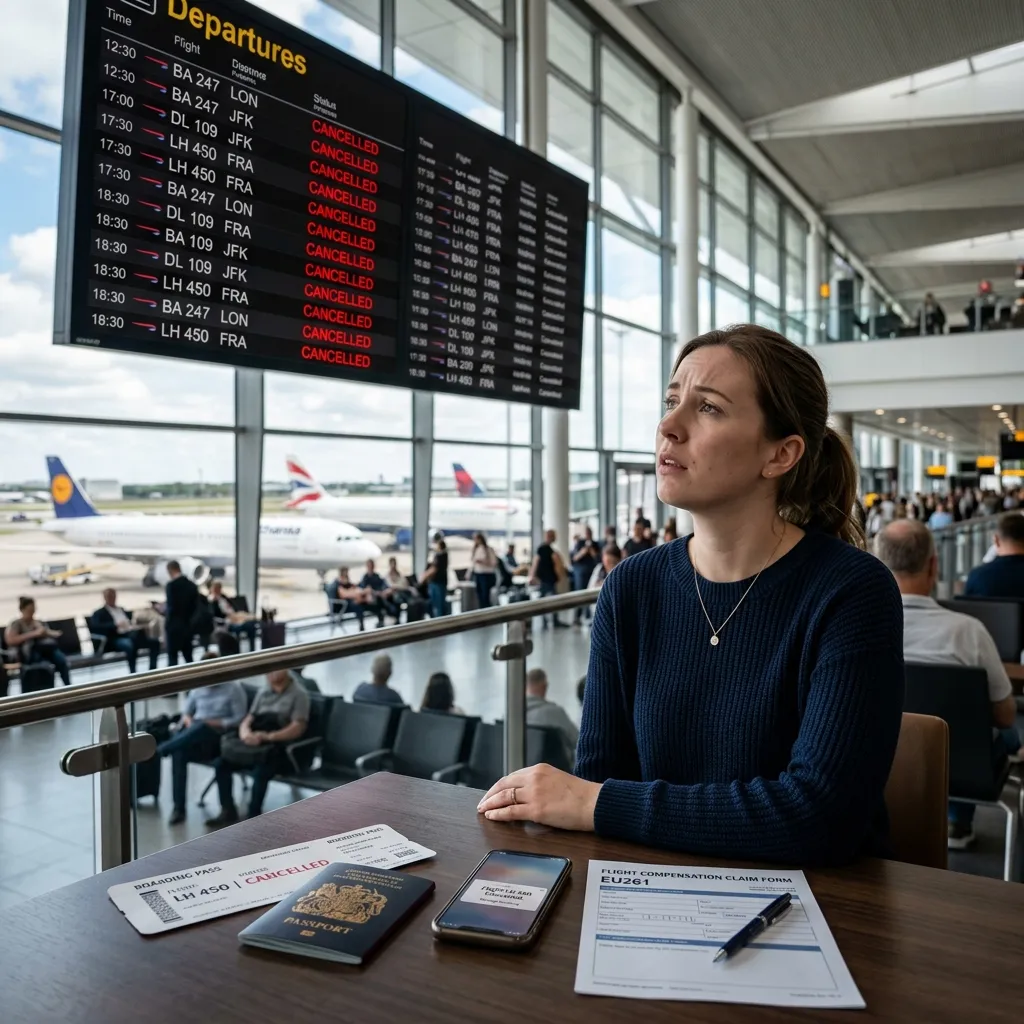
    Airport board showing a cancelled flight, illustrating UK261 flight cancellation compensation and passenger rights
    Published 14 July 2026 · verified July 2026

    If your flight is cancelled, you have two separate rights: a refund or a re-routing to get you there, and — if the airline told you less than 14 days before departure and the cancellation was its fault — cash compensation of £220 to £520 under UK261 on top. Being bumped from an overbooked flight is compensated separately again. Here’s exactly what you’re owed for a cancelled flight in 2026, in the UK, EU and US.

    Quick answer: flight cancellation compensation

    • Always: your choice of a full refund or re-routing, plus care while you wait.
    • Plus compensation of £220–£520 if you were told <14 days before departure and it was the airline’s fault.
    • No compensation if given 14+ days’ notice, re-routed close to schedule, or the cause was extraordinary.
    • Bumped from an overbooked flight? That’s separate cash compensation — and in the US it can be hundreds of dollars.
    • US flights: cancellations mean an automatic cash refund, not a fixed payout.

    Are you owed flight cancellation compensation?

    You’re owed compensation if the airline cancelled less than 14 days before departure, it was their fault, and you weren’t re-routed close to your original schedule.

    Two things always apply when a flight is cancelled, no matter the reason: you can choose a full refund or re-routing to your destination, and the airline must provide care (food, drink and a hotel if needed) while you wait. Cash compensation is the extra bit, and it depends on notice and cause:

    How much notice you gotCompensation?
    14 days or more before departureNo compensation
    Less than 14 days, airline’s fault, not re-routed close to scheduleYes — £220–£520
    Less than 14 days, but cause was extraordinary (weather, ATC strike)No compensation — but refund/re-routing and care still apply

    How much is cancelled flight compensation?

    When it is payable, the amount follows the same distance bands as a delay, per passenger:

    Flight distanceUK261EU261
    Under 1,500 km£220€250
    1,500–3,500 km£350€400
    Over 3,500 km£520 (can be halved to £260 if re-routed close to schedule)€600 (or €300)

    Use the flight compensation calculator to check your band and amount in a few seconds.

    The re-routing exemption: when the airline avoids paying

    Even with less than 14 days’ notice, no compensation is due if the airline re-routed you close to your original times.

    This is the get-out clause airlines rely on, so it’s worth knowing the exact windows. Compensation is not payable if the replacement flight fits inside these limits:

    Notice givenNo compensation if the re-route…
    7 to 13 days before departuredeparts no more than 2 hours before your original time and arrives less than 4 hours after your original arrival
    Less than 7 days before departuredeparts no more than 1 hour before your original time and arrives less than 2 hours after your original arrival

    If the re-routing they offered was outside these windows — for example, it got you in five hours late — the exemption doesn’t apply and compensation is due. Check the actual times before accepting an airline’s “no compensation” line.

    Refund or re-routing: your choice, not theirs

    When a flight is cancelled you decide between:

    • A full refund of the unused parts of your ticket — paid within 7 days, in cash or to your original payment method (not a voucher unless you want one), plus a flight back to your first departure point if you’re part-way through a journey.
    • Re-routing to your destination at the earliest opportunity, or on a later date that suits you.

    Don’t be pushed into a voucher. Airlines sometimes offer travel credit as if it’s the only option. You have the legal right to a cash refund, and taking a voucher can weaken your position.

    Bumped from an overbooked flight? (denied boarding)

    Being involuntarily bumped is compensated separately — and it’s often more than a cancellation.

    Airlines routinely sell more seats than the aircraft has. If they then ask for volunteers and no one accepts, they bump passengers involuntarily — and that triggers compensation, on top of a refund or re-routing.

    UK and EU flights

    Involuntary denied boarding pays the full distance-band amount — £220, £350 or £520 — regardless of how late you eventually arrive. Overbooking is squarely within the airline’s control, so “extraordinary circumstances” is not a defence.

    US flights

    The US uses a different, fare-based system for involuntary bumping:

    How late the bump makes you arriveCompensation
    Domestic 1–2 hrs (international 1–4 hrs)200% of your one-way fare, up to $1,075
    Domestic over 2 hrs (international over 4 hrs)400% of your one-way fare, up to $2,150

    Involuntary bumping must be paid in cash or cheque — not vouchers. If you volunteer to be bumped, whatever you accept is a private deal with the airline, so hold out for cash and confirmed re-routing rather than a low-value voucher.

    US flights: cancellations and refunds (DOT)

    If your US flight is cancelled and you choose not to travel, the DOT rules require an automatic full refund — the ticket price plus taxes and fees, in cash or your original payment method, within 7 business days (card) or 20 calendar days (other). Crucially, the US has no fixed cancellation payout like UK261: you get your money back, not a €600-style bonus. The exception is involuntary bumping, which does carry the cash compensation above.

    When you’re not owed compensation

    • You were told 14 days or more before departure.
    • You were re-routed within the notice windows above.
    • The cancellation was a genuine extraordinary circumstance — severe weather, ATC strikes, security incidents. (Refund/re-routing and care still apply.)
    • You voluntarily gave up your seat in return for benefits.

    As always, treat a “technical fault” or “crew shortage” explanation with suspicion — those are usually within the airline’s control and don’t remove your right to compensation.

    How to claim

    Claim directly with the airline — it’s free and you keep the full amount. State your booking reference, the cancelled flight, how much notice you were given, the re-routing you were offered (with times), and the compensation you’re claiming. Our guide to claiming compensation has a copy-and-paste template and a rundown of the excuses airlines use and how to challenge each.

    Worked example

    Edinburgh → Paris, cancelled 3 days before departure due to a crew shortage. You’re re-routed onto a flight that arrives five hours after your original time. Because you had under 7 days’ notice and the re-route arrived more than 2 hours late, the exemption doesn’t apply — and a crew shortage isn’t extraordinary. The route is under 1,500 km, so you’re owed £220 per passenger, plus you keep the re-routing and any meals while you waited.

    Related guides and tools

    FAQs

    How much compensation for a cancelled flight?

    If the airline cancelled less than 14 days before departure, it was their fault and you weren’t re-routed close to schedule, you’re owed £220 (under 1,500 km), £350 (1,500–3,500 km) or £520 (over 3,500 km) per passenger under UK261, plus a refund or re-routing.

    Do I get compensation if my flight is cancelled?

    Only if you were given less than 14 days’ notice and the cancellation was within the airline’s control. You always get a refund or re-routing and care, but the cash compensation depends on notice and cause.

    Can I get a refund for a cancelled flight?

    Yes. You can always choose a full refund of the unused ticket instead of re-routing, paid within 7 days in cash or to your original payment method — not a voucher unless you accept one.

    What is the 14-day rule for cancelled flights?

    If the airline tells you 14 days or more before departure, no compensation is due. Compensation only becomes possible when notice is shorter than 14 days and the cancellation was the airline’s fault.

    How much compensation for being bumped from a flight?

    In the UK/EU, involuntary denied boarding pays the full £220–£520 distance band. In the US it’s 200% of your one-way fare (up to $1,075) for shorter delays and 400% (up to $2,150) for longer ones, paid in cash.

    Can I claim if my flight was cancelled due to weather?

    No compensation is payable for genuine extraordinary circumstances like severe weather or ATC strikes, but you still get a refund or re-routing and care while you wait.

    Do US airlines pay compensation for cancellations?

    Not a fixed payout. The DOT requires an automatic cash refund if your flight is cancelled and you don’t travel, but there’s no EU-style compensation. Involuntary bumping is the exception and does carry cash compensation.

    Should I accept a voucher instead of a refund?

    Only if you genuinely want travel credit. You have the legal right to a cash refund for a cancelled flight, so a voucher is optional — and usually worse value.

    Sources

    Based on UK Civil Aviation Authority guidance on cancellations and denied boarding (the 14-day rule, re-routing exemption windows and distance bands), with EU261 amounts from the equivalent EU regulation and US denied-boarding and refund rules from the US Department of Transportation. Verified 14 July 2026. This is general guidance, not legal advice — confirm your position with the airline or the CAA.

  • Missed Connecting Flight Compensation: Your Rights (2026)

    Missed Connecting Flight Compensation: Your Rights (2026)

    Traveller looking at a departure board after missing a connecting flight, illustrating UK261 missed connection compensation
    Published 14 July 2026 · verified July 2026

    Miss a connecting flight because an earlier leg ran late? Whether you’re owed compensation comes down to one thing: was the whole journey on a single booking? If it was, and you reach your final destination 3 or more hours late, you can claim £220 to £520 under UK261 — and it’s calculated on your whole journey’s distance, not the short leg that failed. If you booked the flights separately, you’re on your own. Here’s exactly where you stand, and what to do.

    Quick answer: missed connecting flight compensation

    • Single booking (one ticket): protected — if you arrive 3+ hours late at your final destination, you can claim £220–£520.
    • The amount is based on your total journey distance, not the missed leg — a missed short-haul connection can still pay the long-haul rate.
    • Separate tickets (self-transfer): not protected — the airline isn’t liable for a connection you arranged yourself.
    • On a single booking, the airline must also re-route you for free and look after you while you wait.
    • No compensation if the cause was genuinely extraordinary (severe weather, ATC strike).

    What happens if you miss your connecting flight?

    On a single booking, the airline re-books you onto the next available flight for free. On separate tickets, the second flight is simply lost.

    The first thing that happens depends entirely on how you booked. If both flights are on one ticket and the airline’s delay caused you to miss the connection, the airline is responsible for getting you to your destination — it will re-route you onto the next available service at no cost, and look after you while you wait. You do not buy a new ticket.

    If your flights were on separate bookings, the second airline has no obligation to you: from its point of view you simply didn’t show up. Your original fare is usually gone, and you’ll need to buy a new ticket or rely on travel insurance. This is the defining risk of a self-transfer, and it’s why the booking type matters more than anything else here.

    Are you owed missed connection compensation?

    Yes, if the whole trip was one booking, the delay was the airline’s fault, and you arrived 3+ hours late at your final destination.

    Your situationCompensation?
    One booking; earlier leg delayed by the airline; 3+ hours late at final destinationYes — £220–£520
    One booking, but the cause was extraordinary (severe weather, ATC strike)No compensation, but you keep re-routing and care
    Separate tickets (self-transfer) — you missed the second flightNo — not protected
    You arrived less than 3 hours late at your final destinationNo compensation

    To be covered, the journey also has to fall under UK261 or EU261 — that means departing a UK or EU airport (on any airline), or arriving in the UK/EU on a UK or EU airline. Not sure of the amount? Run it through the flight delay compensation calculator.

    How much is a missed connection worth?

    It’s based on the distance of your whole journey — from your first departure airport to your final destination — not the leg you missed.

    This is the detail that makes missed-connection claims so valuable, and it’s the part travellers (and sometimes airline agents) get wrong. The compensation band is set by the total great-circle distance of the entire itinerary:

    Total journey distanceArrival delayUK261EU261
    Under 1,500 km3+ hours£220€250
    1,500–3,500 km3+ hours£350€400
    Over 3,500 km3–4 hours£260€300
    Over 3,500 kmOver 4 hours£520€600

    So a delayed London–Frankfurt hop that makes you miss a Frankfurt–Singapore connection is judged on the London–Singapore distance — comfortably over 3,500 km. Arrive in Singapore more than four hours late and that’s £520 per passenger, even though the flight that actually failed was a short-haul leg worth £220 on its own.

    The one thing that decides it: single ticket vs separate tickets

    Everything above rests on this distinction, so it’s worth being crystal clear:

    Single booking (through ticket)Separate tickets (self-transfer)
    Bags checked through?Yes, to final destinationNo — you reclaim and re-check
    Airline re-books you free if you misconnect?YesNo
    UK261/EU261 compensation for the miss?Yes (if 3+ hrs late, airline’s fault)No
    Care while you wait?YesNo

    Booking your own connection on separate tickets is often cheaper up front, but it moves all the risk onto you. If that’s how your trip is arranged, treat the connection with real caution — our guides to the Heathrow self-transfer, JFK self-transfer and Dubai self-transfer explain how much time to leave, and the Layover Calculator tells you whether a connection is realistic before you book.

    What to do the moment you miss a connection

    1. Go straight to your airline’s transfer desk (or app) — on a single booking they should already be re-booking you.
    2. Get the new flight in writing and confirm your bags are being forwarded.
    3. Note the reason you were given for the original delay — you’ll need it for a compensation claim.
    4. Claim your right to care — meal vouchers, and a hotel if it’s overnight. If they don’t offer, keep receipts and claim them back.
    5. Record your actual arrival time at your final destination — that’s what the 3-hour test uses.

    When you’re not owed compensation

    • The flights were on separate tickets — the missed connection isn’t protected.
    • You reached your final destination less than 3 hours late.
    • The delay was a genuine extraordinary circumstance — severe weather, an ATC strike or a security incident. (You still keep re-routing and care.)
    • The connection time you were sold met the airport’s minimum connection time and you missed it for a reason of your own.

    As with any delay claim, be sceptical of a “technical fault” excuse — routine technical problems and crew shortages usually don’t qualify as extraordinary, so a refusal on those grounds is worth challenging.

    How to claim

    Claim directly with the airline that operated the delayed flight — it’s free and you keep the full amount. Quote your booking reference, the flight that was delayed, your actual arrival time at the final destination, the total journey distance and the amount you’re claiming. Our guide to claiming delayed flight compensation includes a copy-and-paste template and a breakdown of the excuses airlines use most, and how to challenge each one.

    Worked example

    Manchester → Amsterdam → New York, all on one KLM booking. The Manchester–Amsterdam leg leaves 90 minutes late due to a technical fault, and you miss the Amsterdam–New York flight. KLM re-books you onto a later service and you land in New York five hours behind schedule. Because it’s one booking and you arrived over three hours late at your final destination, you’re owed compensation on the Manchester–New York distance (over 3,500 km) — £520 per passenger. A technical fault isn’t normally extraordinary, so a refusal should be challenged. Had you booked Manchester–Amsterdam and Amsterdam–New York separately, none of this would apply.

    Related guides and tools

    FAQs

    Do I get compensation for a missed connecting flight?

    Yes, if the whole journey was on one booking, an earlier leg was delayed by the airline, and you arrived at your final destination three or more hours late. You could be owed £220–£520 under UK261, based on your total journey distance.

    What happens if I miss my connecting flight?

    On a single booking, the airline re-books you onto the next available flight for free and looks after you while you wait. On separate tickets, the second airline treats it as a no-show and you usually have to buy a new ticket.

    Is missed connection compensation based on the missed leg or the whole journey?

    The whole journey. The compensation band uses the total distance from your first departure airport to your final destination, so a missed short-haul connection can still pay the long-haul rate.

    Do I get compensation if I booked separate tickets?

    No. Separate tickets are treated as a self-transfer at your own risk, so the airline isn’t liable for a connection you arranged yourself. Only flights under one booking reference are protected.

    Which airline do I claim from for a missed connection?

    The airline that operated the delayed flight that caused you to miss the connection. On a single booking that’s usually the airline you booked the whole itinerary with.

    How late do I have to be to claim for a missed connection?

    Three hours or more at your final destination. Delays at the intermediate connection point don’t count on their own — what matters is when you finally arrive.

    Can I claim if bad weather caused the delay?

    No compensation is payable for genuine extraordinary circumstances such as severe weather. However, on a single booking you keep your right to free re-routing and to care while you wait.

    What if the connection time was too short?

    If the airline sold you a connection at or above the airport’s minimum connection time and its own delay made you miss it, you’re still covered on a single booking. A self-booked connection that was too tight is your own risk.

    Sources

    Based on UK Civil Aviation Authority guidance on delays and connecting flights (single-booking protection, the three-hour final-destination threshold and distance bands), with EU261 amounts from the equivalent EU regulation. Verified 14 July 2026. This is general guidance, not legal advice — confirm your position with the airline or the CAA.

  • Delayed Flight Compensation UK: How to Claim What You’re Owed (2026)

    Delayed Flight Compensation UK: How to Claim What You’re Owed (2026)

    Passengers waiting at an airport departure board showing a delayed flight, illustrating UK261 delay compensation claims
    Published 14 July 2026 · verified July 2026

    If your flight arrived three or more hours late, you may be owed £220 to £520 per passenger under UK261 — and you can claim it yourself, free, without giving a third of it to a claims company. This guide covers delayed flight compensation UK rules in plain English: whether you qualify, exactly how to claim, a copy-and-paste template you can send today, and how to push back when the airline says no.

    Quick answer

    • You qualify if you arrived at your final destination 3+ hours late and the cause was within the airline’s control.
    • How much: £220 (under 1,500 km), £350 (1,500–3,500 km), £260 or £520 (over 3,500 km) — per passenger.
    • Claim direct with the airline — it’s free and you keep 100%. Claims firms take 25–36%.
    • Even with no compensation (e.g. bad weather) you still get food, drink and a hotel if needed.
    • You generally have 6 years to claim in England and Wales (5 in Scotland).

    Am I entitled to flight delay compensation?

    You are entitled if you arrived 3+ hours late at your final destination, on a covered flight, and the delay was the airline’s responsibility.

    Three conditions have to be met. First, the route must be covered: UK261 applies to any flight departing a UK airport (on any airline) and to flights arriving in the UK on a UK or EU airline. EU261 works identically for EU airports. Second, you must have arrived at your final destination at least three hours behind schedule. Third, the cause must have been within the airline’s control — a technical fault, crew shortage or knock-on delay counts; a hurricane does not.

    Two things that do not matter, despite what people assume: how much you paid (a £39 fare attracts the same compensation as a £400 one) and whether you booked a package. Compensation is a statutory entitlement, not a goodwill gesture.

    How much compensation for a delayed flight?

    The amount is fixed by distance and delay length, and it is paid per passenger — so a family of four can be owed four times these figures:

    Flight distanceArrival delayUK261EU261
    Under 1,500 km3+ hours£220€250
    1,500–3,500 km3+ hours£350€400
    Over 3,500 km3–4 hours£260€300
    Over 3,500 kmOver 4 hours£520€600

    Notice the long-haul split: a flight over 3,500 km that lands 3 hours 45 minutes late pays £260, but at 4 hours 5 minutes it pays £520. Those twenty minutes are worth £260 per person, which is exactly why you should record your actual arrival time. Not sure which band you’re in? Run it through the flight delay compensation calculator.

    The 3-hour rule: arrival, not departure

    The clock is measured by when you reached your final destination — not when your flight left.

    This is the single most misunderstood part of the rules, and airlines rarely correct you. A flight that pushes back two hours late but makes up time in the air may arrive only 90 minutes late — no compensation. Conversely, a modest departure delay that causes you to miss a connection and reach your destination six hours late is a six-hour delay, and the full compensation applies.

    “Arrival” has a specific legal meaning too: it is when the aircraft doors open, not when the wheels touch down. If you are close to a threshold, note the time the doors actually opened.

    What you get even when compensation isn’t due

    Airlines lean on “extraordinary circumstances” to refuse compensation — but that defence does not remove your right to care. Once your delay passes these thresholds, the airline must look after you regardless of the cause:

    Flight distanceCare starts afterWhat you’re owed
    Under 1,500 km2 hoursFood and drink, means to communicate, plus hotel and transfers if you’re delayed overnight
    1,500–3,500 km3 hours
    Over 3,500 km4 hours

    If the airline doesn’t provide it, buy what’s reasonable and keep the receipts — you can claim the cost back afterwards. And if the delay reaches five hours, you can abandon the trip entirely and claim a full refund instead.

    How to claim flight delay compensation (step by step)

    Claim directly with the airline first — it’s free, and you keep the entire amount.

    1. Gather your evidence

    • Booking reference and passenger names
    • Boarding passes or e-tickets
    • Scheduled vs actual arrival times (a photo of the departure board or arrivals screen is ideal)
    • Whatever reason the airline announced or texted you
    • Receipts for food, drink or a hotel you paid for yourself

    2. Work out exactly what you’re owed

    Check your distance band and delay length so you can state a specific figure. Vague claims are easier to fob off than “I am claiming £520 per passenger for four passengers, totalling £2,080.”

    3. Send the claim in writing

    Use the airline’s online claim form if it has one; otherwise email customer relations. Put it in writing either way so you have a record and a timestamp.

    4. Give them time, then chase

    UK airlines have eight weeks to respond. If they miss it, or refuse, you escalate.

    5. Escalate if refused

    Take it to the airline’s alternative dispute resolution (ADR) scheme, or to the Civil Aviation Authority if the airline isn’t in one. Both are free to use. Small claims court remains an option for persistent refusals.

    Copy-and-paste claim template

    Send this to the airline’s customer relations team, filling in the bracketed details:

    Subject: UK261 flight delay compensation claim – [flight number], [date], booking [reference]

    Dear [Airline] Customer Relations,

    I am writing to claim compensation under UK Regulation (EC) No. 261/2004 for a delay to flight [flight number] from [departure airport] to [arrival airport] on [date], booking reference [reference].

    The flight was scheduled to arrive at [scheduled time] but I arrived at my final destination at [actual time] — a delay of [X hours Y minutes]. The flight distance falls in the [under 1,500 km / 1,500–3,500 km / over 3,500 km] band.

    On that basis I am claiming £[amount] per passenger for [number] passengers, totalling £[total]. The passengers are: [names].

    [If you paid for meals or a hotel:] I am also claiming £[amount] in expenses incurred because assistance was not provided. Receipts are attached.

    Please confirm payment within eight weeks. If you consider this delay to have been caused by extraordinary circumstances, please provide the specific reason and supporting evidence, as required.

    Yours faithfully,
    [Your name]
    [Contact details]

    Why that last line matters: asking the airline to evidence its extraordinary-circumstances claim up front tends to produce either a payout or a specific reason you can then challenge — rather than a vague brush-off.

    Common airline excuses — and how to challenge them

    What they sayDoes it excuse compensation?Your response
    “Technical fault”Usually notRoutine technical problems are part of running an airline. Challenge it and ask for evidence.
    “Crew shortage / crew out of hours”Usually notStaffing is within the airline’s control. Push back.
    “The inbound aircraft arrived late”Usually notKnock-on delays from the aircraft’s own earlier rotation generally don’t qualify.
    “Severe weather”Yes, if genuineCheck whether other flights operated normally that day. You still keep right to care.
    “Air traffic control strike / restrictions”YesOutside the airline’s control — but right to care still applies.
    “Bird strike” or security incidentYesGenuinely extraordinary. Right to care still applies.

    Don’t accept vouchers as a substitute. Airlines sometimes offer travel credit worth less than your legal entitlement. You are entitled to cash — accepting a voucher can end your claim.

    Should you use a flight compensation claim company?

    You don’t need one. Claim-management firms typically keep 25–36% of your payout — on a £520 claim that’s up to about £190 gone, for filling in a form you could complete in fifteen minutes. Airlines are legally obliged to deal with you directly, and using a firm doesn’t make a valid claim more likely to succeed.

    They’re worth considering only if the airline has already refused, you’ve exhausted ADR, and you’d rather not pursue it yourself.

    How long do you have to claim?

    In England and Wales you generally have six years from the date of the flight; in Scotland it’s five. That means old delays are often still claimable — it’s well worth checking past boarding passes and booking emails before you assume it’s too late.

    Worked example

    London to New York, delayed on arrival by 4 hours 20 minutes, blamed on a technical fault, two passengers: the route is over 3,500 km and the delay exceeds four hours, so the rate is £520 per passenger = £1,040. A technical fault is not normally an extraordinary circumstance, so a refusal on that basis should be challenged. The passengers also waited over four hours, so any meals they bought are claimable on top with receipts.

    Related guides and tools

    FAQs

    How much is delayed flight compensation in the UK?

    £220 for flights under 1,500 km, £350 for 1,500–3,500 km, and £520 for flights over 3,500 km — reduced to £260 if a long-haul flight arrives between three and four hours late. It is paid per passenger and doesn’t depend on your ticket price.

    Am I entitled to flight delay compensation?

    Yes, if you arrived at your final destination three or more hours late, your flight departed a UK airport (or arrived in the UK on a UK/EU airline), and the cause was within the airline’s control.

    How do I claim flight delay compensation?

    Claim directly with the airline in writing, quoting your flight number, booking reference, actual arrival delay and the amount you’re claiming. It’s free and you keep 100%. If refused, escalate to the airline’s ADR scheme or the CAA.

    Is the 3 hours from departure or arrival?

    Arrival at your final destination. A late departure that still lands on time doesn’t qualify, while a small departure delay that makes you miss a connection and arrive six hours late does.

    Can I claim if the delay was caused by weather?

    No compensation is payable for genuine extraordinary circumstances such as severe weather or ATC strikes. However, you keep your right to care — food, drink and accommodation — and can claim a refund if the delay reaches five hours.

    Does a technical fault count as an extraordinary circumstance?

    Usually not. Routine technical problems are considered part of normal airline operations, so a refusal on those grounds is well worth challenging.

    How far back can I claim for a delayed flight?

    Generally six years in England and Wales, and five years in Scotland, so past flights are often still claimable.

    Do I have to use a claims company?

    No. Claiming yourself is free and takes about fifteen minutes. Claims firms typically keep 25–36% of your compensation.

    What if the airline ignores my claim?

    Airlines have eight weeks to respond. After that you can escalate free of charge to their alternative dispute resolution scheme, or to the Civil Aviation Authority if they aren’t a member of one.

    Sources

    Based on UK Civil Aviation Authority guidance on flight delays and cancellations (compensation bands, the three-hour arrival threshold, the long-haul reduction, right-to-care thresholds and the eight-week response period), with EU261 amounts from the equivalent EU regulation. Verified 14 July 2026. This is general guidance, not legal advice — confirm your position with the airline or the CAA.