
Last updated: September 2, 2026
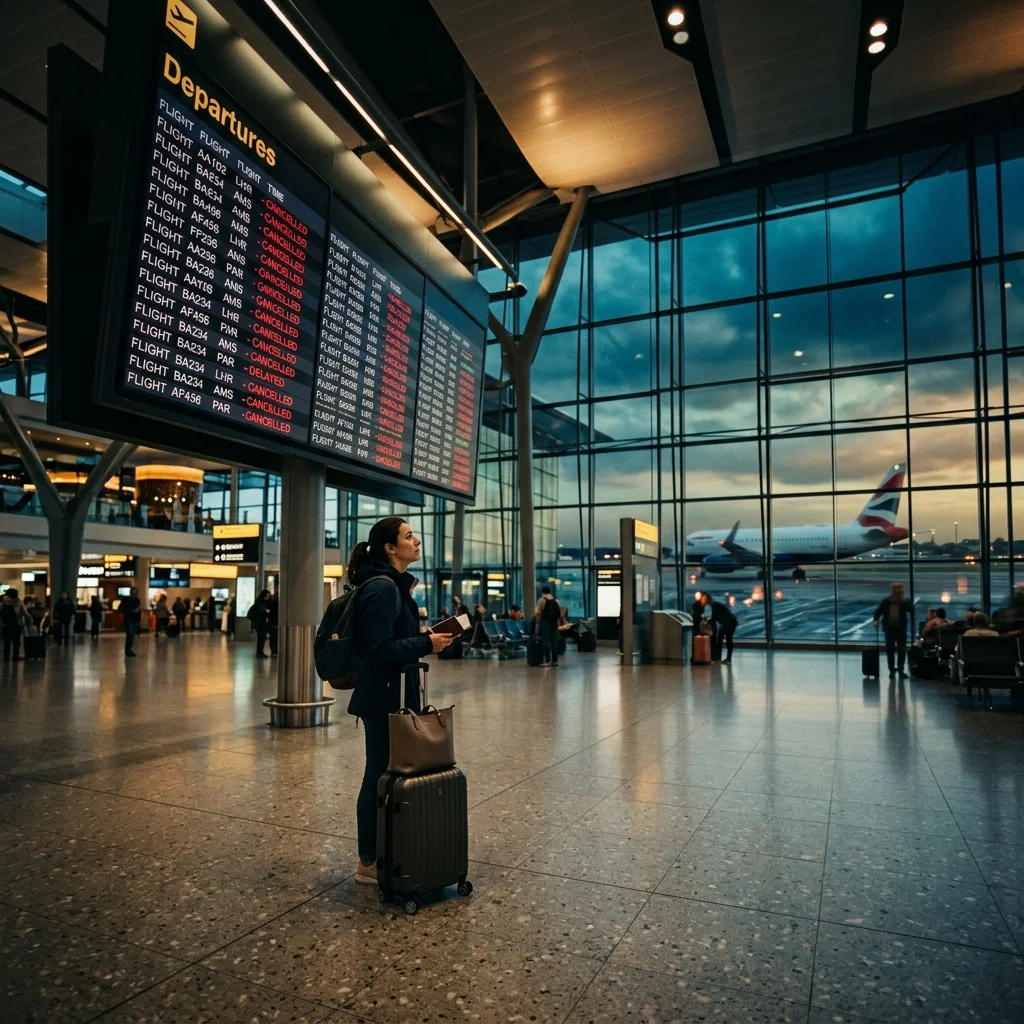
Booking two separate flights on different airlines can save you real money, but it changes the rules of your layover in ways that surprise a lot of travellers. Here’s a friendly guide to what self-transfers actually involve, where the risks sit, and how to make one work smoothly if the savings are worth it.
What is a self-transfer flight?
A self-transfer (sometimes called a “hacker fare” or “virtual interlining”) is when you book a journey using two separate tickets, often on different, unaffiliated airlines. Instead of the airline treating your trip as one continuous journey, each airline treats its leg as a completely independent flight.
Quick self-transfer answer
Self-transfer flights are risky because the missed-connection problem often becomes yours, not the airline’s. If you are trying to judge whether a short connection is still sensible, use the Layover Calculator and Minimum Connection Time Calculator before you book.
| Hidden risk | Why it catches people out | What TripBuffer would do |
|---|---|---|
| Separate tickets | Missed-connection protection usually disappears | Treat the trip as two journeys, not one smooth connection. |
| Checked baggage | Reclaim and re-check steps can destroy the apparent buffer | Assume the airport process is much longer than the walking time. |
| Airport or terminal changes | The visible transfer segment hides the rest of the journey friction | Model the full connection, not just the transport hop. |
Online travel agencies like Kiwi, Skyscanner and Kayak surface these combinations because pairing a low-cost carrier such as easyJet or Ryanair with a major long-haul carrier can yield real savings — sometimes 30–50% off the equivalent through-ticket. The savings are real, but the connection is entirely your responsibility, and that’s where the trade-off lives.
The 4 main risks of self-transfers
1. No missed-connection protection
If your first flight is delayed and you miss your second flight, the second airline isn’t obligated to help you. Because they are separate tickets, you become a “no-show” for the second flight. You will not be rebooked for free; you’ll need to buy a brand-new ticket at last-minute prices, which can be significantly more than your original fare.
2. The baggage re-check trap
Your checked bags will not be tagged through to your final destination. When you land, you’ll need to:
- Clear immigration (if your transit airport is in a different country to your origin)
- Wait at the baggage carousel to collect your luggage
- Walk to the departures hall
- Queue to check your bag with the second airline
- Clear security and any passport checks again
This sequence can easily consume 90 to 120 minutes of your layover, even at a well-run airport — and longer at peak times.
3. Strict check-in cutoffs
Because you have to re-check your bags, you are bound by the second airline’s check-in cutoff times, usually 45 to 60 minutes before departure. If your layover is two hours but bag drop closes one hour before the flight, you effectively have one hour to deplane, clear immigration, collect a bag and reach the check-in desk. On a busy day that’s optimistic.
4. Visa and immigration considerations
Even if you only plan to transit, a self-transfer with checked bags requires you to enter the country legally to collect your luggage. If you don’t have the right visa for your transit country, you can be denied boarding on your first flight. UK travellers transiting through the US, for example, need an ESTA even when they aren’t planning to leave the airport, because they have to clear customs to collect their bag.
Where self-transfers go wrong: three quick scenarios
Most missed self-transfers share the same shape. Here are three patterns that come up again and again:
- The “saved £200” trap. You book Ryanair to a hub airport and a long-haul carrier home, with a tight 2-hour layover. Ryanair runs 40 minutes late (which is normal), you spend 30 minutes at passport control and another 20 at the bag carousel. Bag drop for your long-haul closed 20 minutes ago. You’re now buying a £600 last-minute ticket and the savings vanish.
- The Heathrow terminal surprise. Your two flights leave from different Heathrow terminals. You hadn’t realised the inter-terminal transfer is 30–45 minutes by free bus, with another security loop at the far end. A 1-hour 45-minute layover becomes a sprint.
- The visa miss. You book a self-transfer through a country where you assumed you’d stay airside, but you have a checked bag. You’re denied boarding on the first flight because you don’t have a transit visa for the connecting country.
How to make a self-transfer work
If the savings are good enough to justify the extra planning, you can make a self-transfer work by following a few simple rules:
- Travel carry-on only. This is the single biggest fix. No bag carousel, no second check-in queue, no airport-side bag re-check. With a mobile boarding pass for your second flight, you can often stay airside the entire time.
- Buffer your layover heavily. Don’t attempt a self-transfer with a standard 1.5-hour layover. Aim for at least 3–4 hours for a domestic self-transfer and 4–6 hours for an international one, especially if you’re checking a bag.
- Check the terminal layout. Read up on the airport before you book. Heathrow terminal transfer times, JFK terminal transfer times and DXB terminal transfer times all have inter-terminal walks that catch people out.
- Confirm the visa rules. If your transit country requires a visa for entry, you’ll likely need one even with a short layover when you have a checked bag.
- Book a refundable second leg if possible. Some carriers offer flexible fares that let you push the connection back if your first flight is delayed.
What to do if you miss your second flight
If the worst happens, don’t panic. The second airline’s customer-service desk is your first stop, but expect to pay. Here’s a quick playbook:
- Check the airline’s website for a same-day flight on the same route. Same-day fares on the same airline are sometimes cheaper than walk-up rates at the airport.
- Ask the gate agent about a “flat tyre” rule. Some airlines (mostly US carriers) will rebook you on the next flight at no charge if you arrive within a couple of hours of a missed flight — it’s an unwritten policy but worth asking.
- Check your travel insurance. Some policies cover missed-connection costs even on self-transfers if you have a paper trail.
- Look at trip-protection products before you book. Kiwi and a few other agencies offer a “guarantee” that does cover self-transfer disruption, usually for a small extra fee. Read the terms carefully — coverage varies.
When self-transfers genuinely make sense
Self-transfers aren’t always a bad idea. They make a lot of sense when:
- You’re travelling carry-on only
- Your layover is long enough that even a major delay can’t kill it (5+ hours)
- The savings are large enough to absorb a worst-case replacement ticket
- Your route has no through-ticket option, so it’s self-transfer or nothing
- You have flexible plans on the other side — a missed connection means a long wait, not a ruined trip
Frequent flyers use self-transfers all the time. The key is knowing where the risks sit and planning accordingly.
Check your layover before you book
The fastest way to sanity-check a self-transfer is to run it through our layover calculator. Tick the “self-transfer” and “checked baggage” boxes and you’ll get an honest read on whether your buffer is comfortable, tight or worth re-thinking. For airport-specific advice, the Heathrow self-transfer guide, JFK self-transfer guide and Dubai Airport self-transfer guide walk through the specifics of each hub.
Frequently asked questions
What is a self-transfer flight?
A self-transfer (also called a hacker fare or virtual interlining) is a journey booked as two separate tickets, often on unaffiliated airlines. Each airline treats its leg as an independent flight, so the connection between them is entirely your responsibility, not theirs.
Are self-transfer flights worth it?
They can be. Pairing a low-cost carrier with a long-haul airline can save 30 to 50% versus a through-ticket. The savings are real, but you take on all the connection risk, so they suit travellers who can build in a big buffer and ideally travel carry-on only.
What is the biggest risk of a self-transfer?
Losing missed-connection protection. Because the tickets are separate, if your first flight is delayed and you miss the second, the second airline treats you as a no-show and is not obliged to rebook you for free.
What happens if I miss my connection on a self-transfer?
You become a no-show for the second flight and usually have to buy a brand-new last-minute ticket, which can cost far more than your original fare and can wipe out the savings entirely.
Do I have to collect my bags on a self-transfer?
Usually yes. Your checked bags are not tagged through, so you must clear immigration, collect your luggage, go to departures, re-check your bag with the second airline and clear security again.
How long does the baggage re-check take?
The full reclaim and re-check sequence can easily take 90 to 120 minutes even at a well-run airport, and longer at peak times. This is why the visible layover can be far shorter than it looks.
How much layover should I leave for a self-transfer?
Do not attempt one with a standard 1.5-hour layover. Aim for at least 3 to 4 hours for a domestic self-transfer and 4 to 6 hours for an international one, especially if you are checking a bag.
Can I do a self-transfer with carry-on only?
Yes, and it is the single biggest fix. With carry-on only and a mobile boarding pass for the second flight you can often stay airside the whole time, avoiding the bag carousel and second check-in queue.
Do I need a visa to transit on a self-transfer?
If you have a checked bag you must enter the country to collect it, which means you need the right transit or entry permission. UK travellers connecting through the US, for example, need an ESTA even if they never planned to leave the airport.
Does travel insurance cover a missed self-transfer connection?
Standard travel insurance often does not cover a missed connection between two separate tickets, because you booked them independently. Some policies offer specific missed-connection or self-transfer cover, so check the wording before you rely on it.
How do I check if my self-transfer layover is long enough?
Model the full airport process, not just the walking time. Our Layover Calculator and Minimum Connection Time Calculator help you judge whether a connection is realistic before you book.
Are booking sites like Kiwi and Skyscanner self-transfers?
They often surface self-transfer combinations to find the cheapest route. Some, such as Kiwi.com, offer their own connection guarantee for itineraries booked through their platform, but a self-transfer you assemble yourself from separate tickets has no such protection.
Does a different terminal make a self-transfer harder?
Yes. If your two flights use different terminals you may face a 30 to 45 minute inter-terminal transfer and a second security check, which can turn a comfortable-looking layover into a sprint. For UK connections, see our Heathrow self-transfer guide.
Is a 2-hour layover enough for a self-transfer?
It is risky, especially with checked bags. A two-hour layover can disappear quickly once you add a delayed first flight, passport control and the bag carousel, and bag drop for the second flight typically closes 45 to 60 minutes before departure.
How can I make a self-transfer safer?
Travel carry-on only, leave a generous buffer of 3 to 6 hours, choose an early-in-the-day first flight so you have rebooking options if it is delayed, check whether your flights use different terminals, and make sure you have any transit visa or ESTA you need.

Reviewed by Muhammad Umar Khan
Founder and editor of TripBuffer. Reviewed against official airport, airline and transport-provider information. For our research standards, see the Editorial Policy.